Silent support is no longer enough – children’s rights need strong defenders in both Europe and Finland
Blog by Ira Custódio, Chief Advisor of the Eurochild Finnish member, The Central Union for Child Welfare, highlighting how, as challenges - and even resistance - continue to grow, it seems that passive support for children’s human rights is no longer enough.
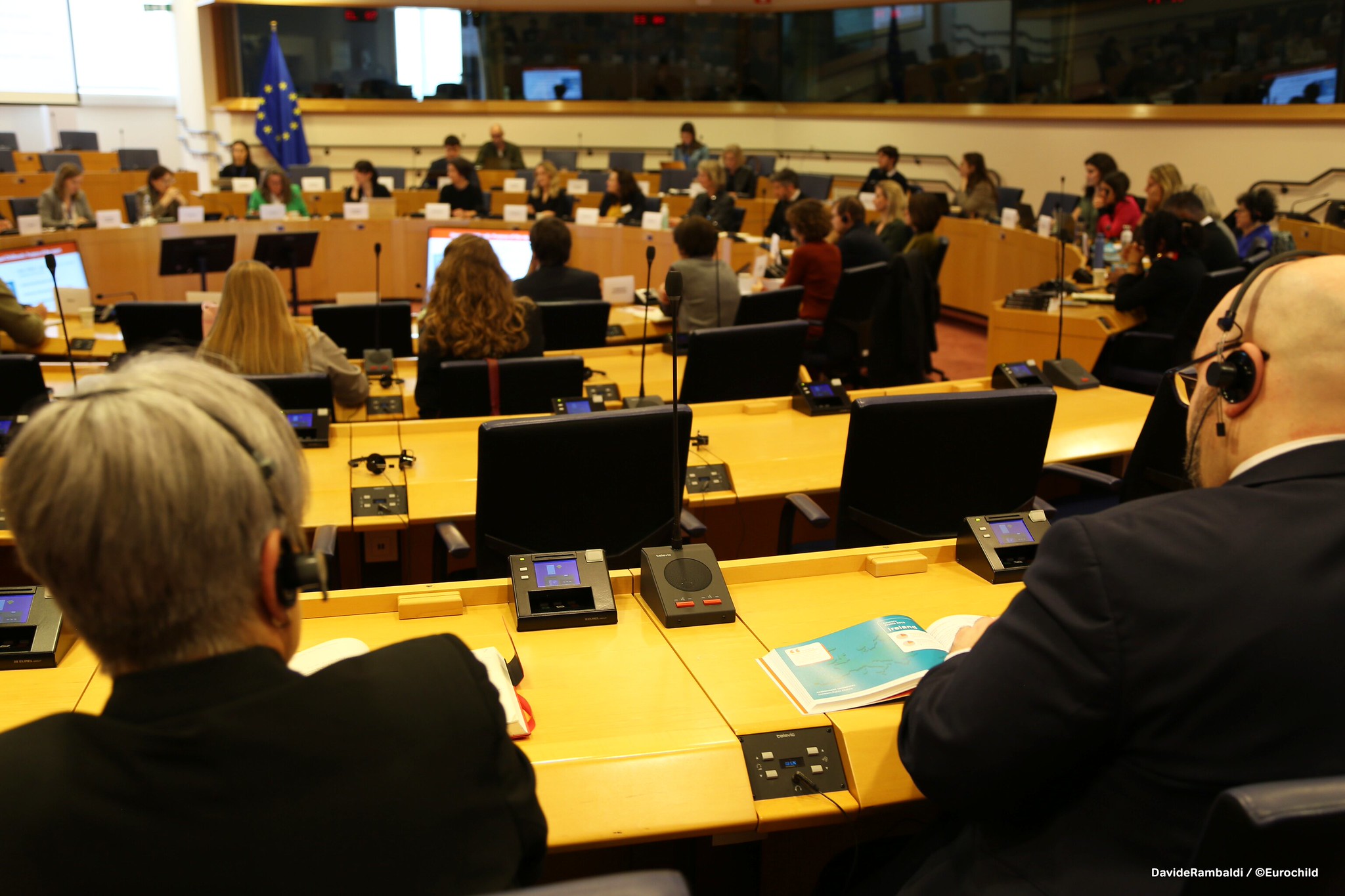
Representatives of civil society and children’s ombudspersons from across Europe gathered at the beginning of February for an event hosted at the European Parliament by Ewa Kopacz, Vice-President of the European Parliament and the Parliament’s Coordinator on Children’s Rights and coorganised by Eurochild and ENOC (the European Network of Ombudspersons for Children) to discuss how to strengthen children’s rights, addressing key challenges such as child poverty, children’s health, and the rise of anti-rights movements.
The Central Union for Child Welfare was invited to speak in the section focusing on combating poverty and social exclusion. As shown in Eurochild’s report Unequal Childhoods: Rights on paper should be rights in practice, Finland’s AROPE indicator, which measures the risk of poverty or social exclusion, worsened by 3.5 percentage points for the child population between 2023 and 2024.
Three key points for Finland
I structured my speech around three recommendations. These are the same recommendations that the Central Union for Child Welfare has put forward for Finland and which are also included in Eurochild’s report.
First, the fight against child poverty must be made a high political priority against which all other policy measures are assessed. This has not been the case so far, and as a result, while other (in themselves positive) goals have been pursued, child poverty has instead increased.
Second, decisions regarding social security reform must be made in a way that reduces child poverty. This naturally requires assessing the combined effects of different measures – and ensuring that political decisions are not locked in before such assessments are carried out.
And third, access to services essential for children and families must be secured by guaranteeing sufficient resources and competent personnel.
None of this will be achieved without cross-party political will and commitment. If politicians are serious about eradicating child poverty, parties should make the fight against it a key theme in next year’s parliamentary elections and, during government formation talks, place their most capable negotiators and strongest political capital at the table where this issue will be decided.
Human rights under threat
The third theme of the discussion, the rise of anti-rights movements, has been monitored by Eurochild for some time. Although similar rhetoric can be identified in Finland as well, it has received relatively little attention in the context of children’s rights. Eurochild’s report shows that challenges to children’s rights in the name of “traditional values” are particularly directed at sexual and gender minorities and at migrants.
Listening to my Bulgarian colleague describe how anti-rights sentiment, Euroscepticism, and anti-NGO attitudes intertwine, I found myself wondering why the situation in Finland appears at least partly different. I also reflected on what we in Finland should understand about this phenomenon and how we can strengthen the position of human rights and the rule of law to prevent similar developments from emerging here in the future.
What has been done and built so far is clearly no longer enough. As human (and children’s) rights are actively challenged, they also need active defenders – both in politics and in public debate. Despite the hardships, civil society remains resilient, but now is the time for everyone who considers these issues important to speak up.
Until now, the work may have been carried out by others, but none of us - in Europe or even in Finland - can afford to rely on that any longer.
Further Information:
- Read about Eurochild's campaign Fighting Anti-Rights Movements
- Listen to theEurochild podcast episodes on the attacks on civil society and on shrinking funds for NGOs.