Grief for Some, Silence for others
In this blog, Eurochild Secretary General Sabine Saliba questions why some children’s deaths spark global outrage while others are buried in euphemism and “context.” War narratives, media framing, and political interests sustain a dangerous double standard.
I was born and raised in a war, and as a brown woman who has lived through the constant fear, death, and impossible choices that war and its aftermath create, I have learned that while there are no heroes or glory in war, human suffering doesn’t trigger the same level of empathy or indignation when it’s inflicted on people like me.
The unlawful US and Israeli attack on Iran, on 28 February, led to an alarming escalation of violence across Southwest Asian countries. Right now, the US, Israel and Iran are inflicting horrific civilian suffering. According to reports, a girls’ school in southern Iran was struck in a wave of joint US–Israeli attacks, killing more than 160 people, many of them primarily schoolchildren, and injuring dozens more. According to the Iranian Red Crescent Society, 6,668 civilian locations in Iran, including 65 schools and 14 health centres, have also been targeted in US-Israeli attacks.
I want to be clear about two truths that too few are willing to say together:
- The Iranian regime, under Ayatollah Khamenei, has been a repressive force against its own people for decades. Many Iranians have bravely resisted this regime, demanding freedom, dignity, and self-determination.
- But the US and Israeli assault on Iran is not liberation. It is a war by foreign powers, a war that kills civilians, a war that creates even more instability, and treats brown lives as collateral. It is not an anti-dictatorship intervention: it is geopolitical violence. History shows us this again and again: Iraq was not freed. Syrians were not saved. Afghanistan was not liberated. What we got was endless war, endless suffering, and a global media that finds strategic value in selective empathy.
And here’s the hypocrisy that burns most painfully:
- When Western leaders kill brown children in bombings, what becomes the headline is not the unlawful loss of life but whether the other side’s retaliation is disproportionate.
- But if a state like Iran were ever to strike Israeli or American children, the outrage would be, rightfully so, immediate, absolute, and front-page news everywhere.
Why do we talk about retaliation more than we talk about the initial unlawful killing of children? Why do we treat military power as moral authority in one moment, and a human rights violation in the next, depending on whose bombs they are? If we really believe in human rights, dignity, equality, and international law, we cannot ever allow this double standard to stand. International Human Rights Law and International Humanitarian Law are meant to protect civilians equally. Yet the war keeps escalating, and more grave violations are committed every day by all parties to the conflict. These include attacks on civilians and the forced displacement of entire populations, acts that constitute war crimes and serious breaches of international humanitarian law. But these violations are not judged on an equal footing. The war in Lebanon is a sad reflection of this.
As a Lebanese, I wake up to horrifying news every day. On Thursday, 12 March 2026, Israel attacked the Beirut seafront area where displaced families were sleeping in tents, killing eight people. Eyewitnesses report horrifying images of body parts flying in the air. According to UNICEF, Israeli attacks on Lebanon have killed more than 10 children each day since the beginning of March. At the same time, sweeping displacement orders have forced entire communities to flee their homes. Yet the killing of children and the blanket displacement orders issued by Israel in Lebanon don’t seem alarming enough to condemn.
I see this not necessarily as an analyst or critic, but as someone who has lived and breathed the realities of war. I see how colonial structures never fully ended, they reinvented themselves under new banners: “security,” “democracy promotion,” or “defence of civilisation.” But if brown children killed in a school are not treated as fully human, then nothing has changed at all.
Maybe it’s time that political leaders, journalists, editors, diplomats, academics and policy experts take a step back and reassess the role they want to play in moments of crisis, not just as observers or narrators, but as guardians of the rule of law and of our shared humanity. It’s not too late to show us that they do believe we are all born free and equal in dignity and rights, that human rights were not developed under a false pretext of universality. It’s not too late to step up, through concrete actions, to begin the repair of the unthinkable harm caused in recent years. We are not asking to be saved; we are asking to be treated as equals, as the very principles of human rights demand.
Many in the Arab world, and probably elsewhere, have lost faith in the existing international system. If we don’t act now, we risk falling into a far more fragile and frightening reality where the legal foundations built over decades crumble. If we don't act now, it will soon be time to admit that the system that protects and idolises the oppressive elite while ensuring the oppressed are portrayed as barbaric, uncivilised communities undeserving of empathy needs to fall. But will those who come after be ready to recognise our humanity?
We don’t need to justify our humanity again and again. But until the world acknowledges all civilian deaths with equal moral weight, not just the ones that fit a geopolitical narrative, the cycle of violence will continue, and our collective conscience will remain broken.
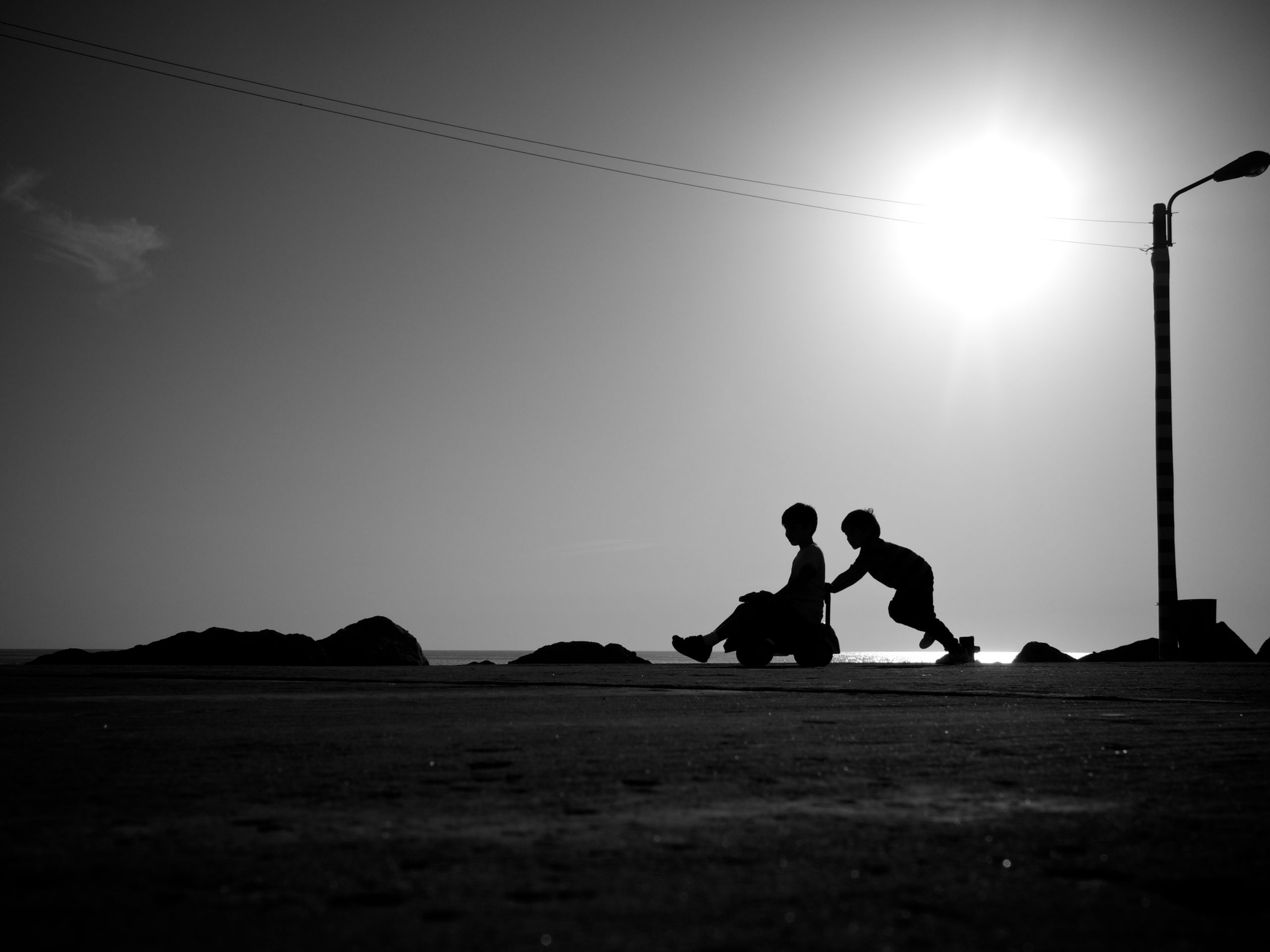
Photo: "Byblos, Lebanon 2012" by Thomas Leuthard.