Do we really have to choose between child protection and privacy online?
While the online environment offers valuable opportunities to children, it also exposes them to increasingly serious risks, including sexual abuse, exploitation, and grooming. In the past months, Eurochild has collected and shared data from its members’ child helplines and hotlines in Estonia and Greece to explain why children must be better protected online.
Child sexual abuse online is among the most severe violations of a child’s bodily integrity and private life. When images or videos of abuse are created, shared or stored online, the violation does not end with the abuse itself. Each viewing, download or rediscovery repeats the harm. For victims and survivors, the continued online circulation of abusive material means their privacy, safety and dignity are violated again and again, sometimes decades later.
Despite this, public debate around children’s rights online and the proposed EU Regulation to Prevent and Combat Child Sexual Abuse is too often framed as a stark choice between child safety and privacy. This framing is not only misleading; it is fundamentally incompatible with the human rights framework that guides European law and international obligations. The UN Convention on the Rights of the Child (UNCRC) recognises both children’s right to protection from all forms of violence and exploitation, and their right to privacy. Children’s rights are interconnected, indivisible, and interrelated and must be balanced considering their best interests, not traded off against one another.
What Frontline organisations tell us
Across Europe, organisations working directly with children see the growing scale and complexity of online harms. Eurochild’s project ‘Evidence to Protect’ developed together with its members, the Estonian Union for Child Welfare and The Smile of the Child in Greece, has highlighted shared risks despite very different national contexts.
Data from Greece and Estonia shows a worrying rise in both named and anonymous reports of child abuse. Behind every report lies a real child with a real experience. Yet sexual abuse remains profoundly underreported in both countries, meaning official figures likely represent only a fraction of the harm taking place.
The types of online risks affecting children and related to digital technologies in these countries include sexual abuse and grooming, the non‑consensual sharing of intimate images, sexual extortion, cyberbullying, and exposure to harmful or inappropriate content. In addition, these risks are increasingly facilitated by emerging technologies and AI. Importantly, data collection systems remain fragmented, and even when data exists, it is often difficult to access it and use it to target interventions, with figures sometimes shared only verbally.
In both Estonia and Greece, a clear pattern emerges: reported risk increases with age, rising steadily through primary school years and peaking in early adolescence. This makes teenage years a critical window for prevention and intervention.
Gender differences are evident, with girls consistently more affected across most categories, although the overall age trend is more pronounced than gender differences alone.
If we look at the broader European Union, evidence clearly shows that the problem extends far beyond Estonia and Greece, affecting children on the continent at an unprecedented scale. Analysts have documented a dramatic surge in child sexual abuse material worldwide, driven in part by the rapid spread of photo-realistic AI-generated abuse. Additionally, reports of online grooming and sexual exploitation are rising sharply, with hundreds of thousands of cases recorded annually and abusive images shared at a relentless pace.
Why Europe Cannot Afford Inaction
Europe plays a central role in this crisis: in 2025, EU Member States hosted more than 60% of all identified child sexual abuse websites. Public awareness of the scale of harm is growing, with large majorities of citizens across several European countries calling for stronger regulation and proactive measures by online platforms.
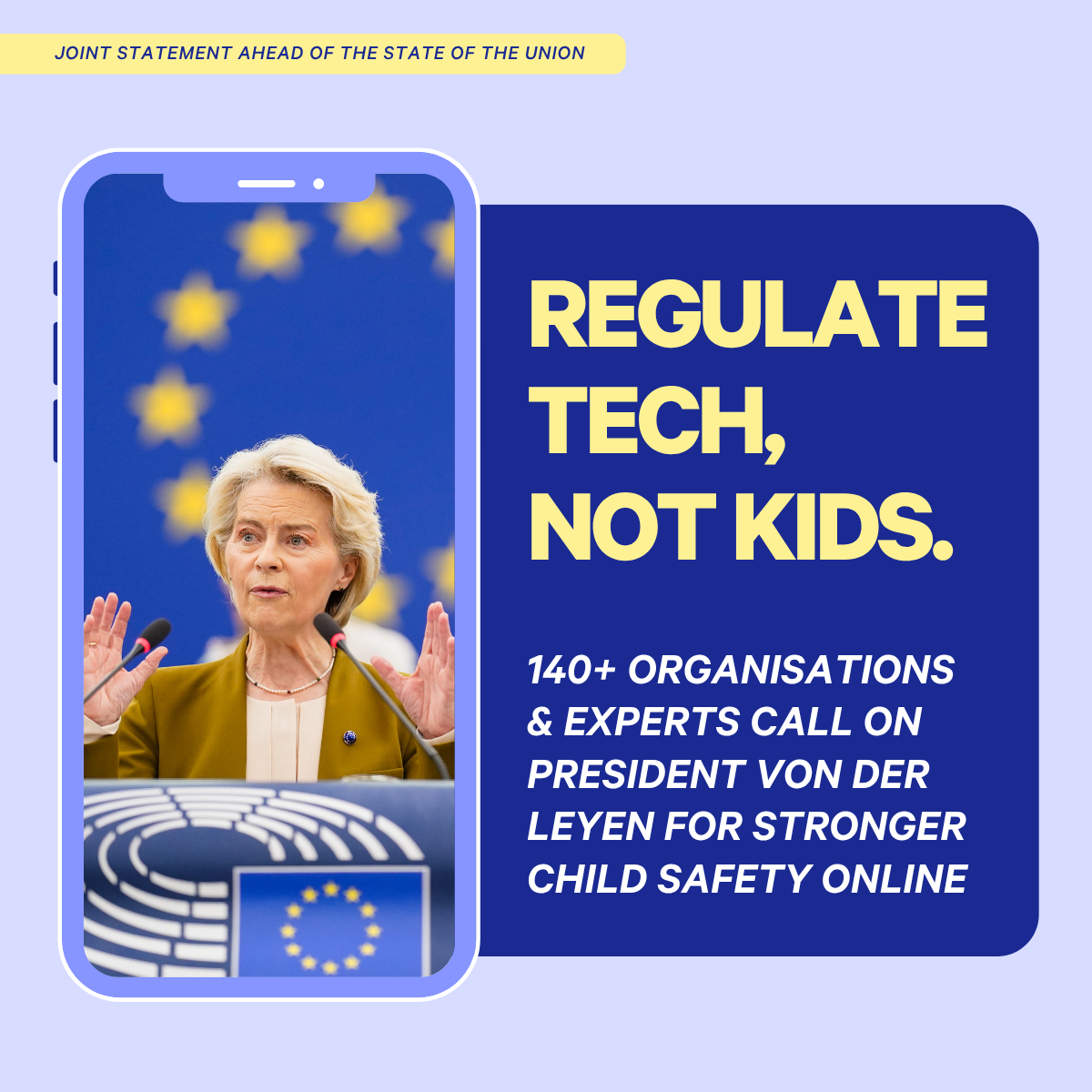
As of 3 April 2026, a critical EU legislative gap exists regarding the detection of child sexual abuse material online. If companies detect and report child sexual abuse material, they risk breaching EU law; however, if they do not report, abuse continues undetected without any possibility for prevention and prosecution. Fewer reports mean fewer victims identified and fewer children protected. The proposed 2022 Regulation to Prevent and Combat Child Sexual Abuse aims to close this gap through a balanced, proportionate framework with strong safeguards. It includes risk-based assessments, targeted, necessary and time-limited detection measures, case-by-case judicial authorisation, national oversight, and privacy-preserving technologies.
Given the urgency of the situation and the legislative gap, negotiations on the Regulation should advance steadily. Protecting children online does not mean giving up privacy, and vice versa. It means understanding that privacy is a cornerstone of safety, dignity and justice for every child. Upholding both child safety and secure communication is not optional; it’s a legal and moral responsibility for every decision maker in Europe.