Beyond the Ban: What can really protect children’s safety and rights online?
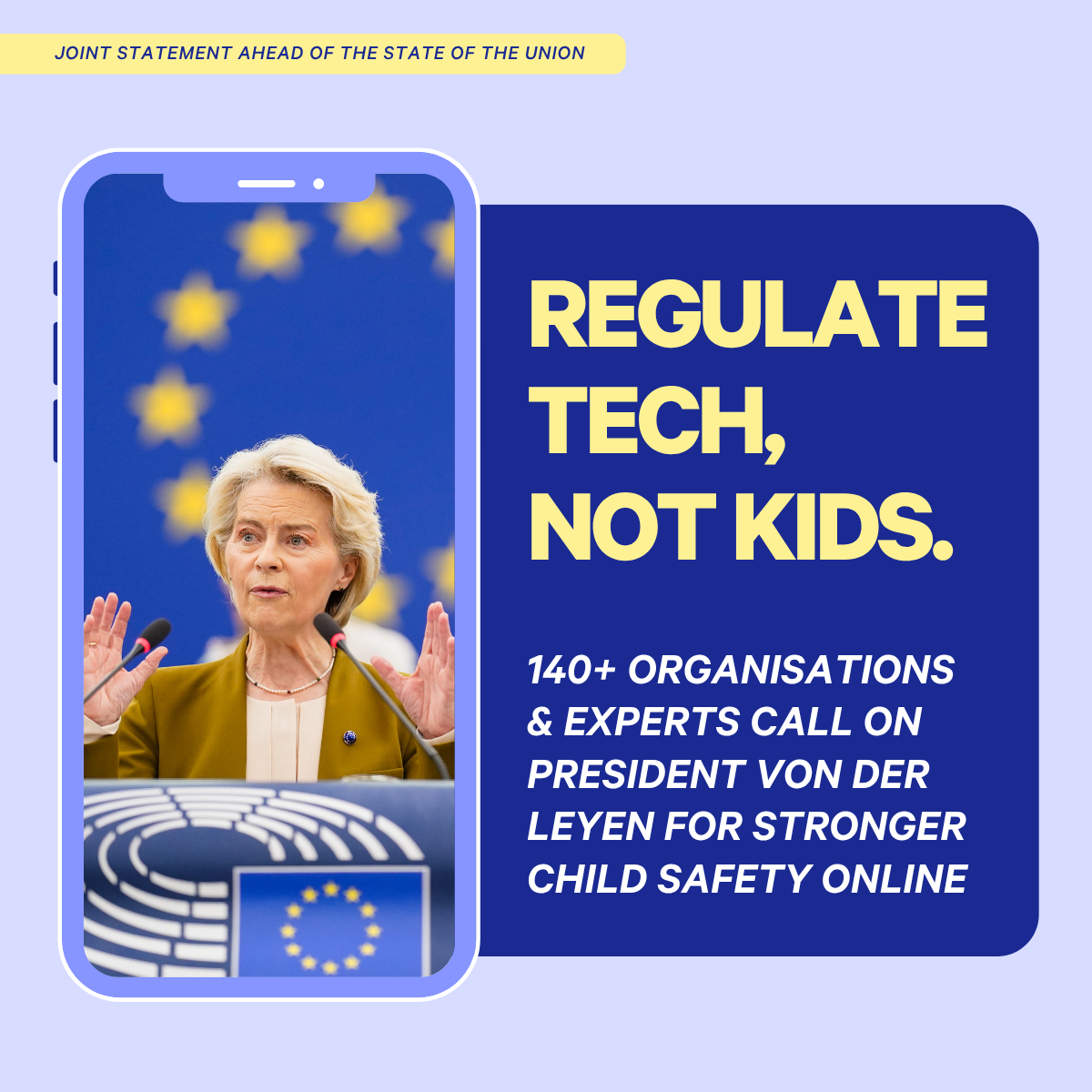
Eurochild and Euroconsumers release a statement stressing that protecting children online requires better regulation, safer platforms, and age-appropriate safeguards, not blanket social media bans.
A) (re)Enforce what we have- Improve the current system and strengthen the legislative framework
- (Re)enforce what we already have: The Digital Services Act, AI Act, GDPR, and Audiovisual Media Services Directive all include provisions to protect children - yet too often, they are not fully used in practice. The real issue is not merely a lack of rules, but a lack of enforcement. The priority should be to apply the existing ones properly, consistently, and with real rigour and effective coordination.
- A higher age limit by itself will not solve the problem: If current age limits for online services are not being respected, simply raising the threshold is unlikely to address the underlying problem. The core question is not just what the age limit should be, but whether effective measures are in place to provide age-appropriate, rights-respecting and safe-by-design services for all children.
- Open the data, build the trust: Giving researchers access to platform data would allow for proper independent scientific scrutiny - something that is essential to rebuild trust and support evidence-based policy. Beyond the Ban: What can really protect children’s safety and rights online?
B) Fix the platform business model - The problem lies in platform design, not in the users
- Make “safe-by-design” the legal default for all digital services accessible to children: This includes stronger privacy settings, filtering of inappropriate content, and switching off manipulative design choices. If a feature only works by keeping users hooked, it shouldn’t be on by default. That includes infinite scroll, autoplay, and algorithmic push notifications targeting children.
- Empower choice, eliminate manipulation: Design recommendation systems that respect children’s preferences by relying primarily on explicit feedback, rather than opaque algorithms that only maximise quick clicks or screen time. Give children a clearer say in shaping their online experience and discourage manipulative systems that push content for short-term engagement, helping children define for themselves what they want to explore and enjoy online. In addition, the Digital Fairness Act should prohibit behavioral advertising for children for all traders, building on the existing ban under the Digital Services Act.
- Slowing things down: Introduce “positive friction” in children’s accounts, such as “think before you share” prompts or limits on reshares, to help young users manage their time and behaviour more consciously. If platforms are designed to encourage constant sharing, they can just as easily be designed to slow things down.
- Help on Hand: Children should have access to clear, accessible and child-friendly reporting and support channels. Platforms should be required to respond within clear timeframes, explain what action has been taken, provide escalation routes, and cooperate with trusted helplines, hotlines and support services where appropriate.
C) Fit for purpose, fit for children- Designing a digital world that safeguards and empowers
- Age Verification as a tool, not the full solution: Age verification must be necessary, proportionate, privacy-friendly, robust, non-discriminatory and transparent. It should not be used as a one-size-fits-all answer to children’s rights and data protection.
- The digital environment should be age-appropriate: All children under 18 should benefit from a high level of protection online. However, safeguards should reflect children’s evolving capacities: younger children may need stronger default protections and limits, while older teenagers should have greater autonomy, choice, and control. In practice, this means age-appropriate settings, recommender safeguards, privacy-by-default, limits on profiling and behavioural advertising, and protections from harmful contact and manipulative design across the whole under-18 spectrum, not a single cut-off that treats all children the same.
- Let children shape the rules: Children should be directly involved in designing policies that affect their digital lives. As shown in Euroconsumers’ national dialogues, they have clear, thoughtful and often very practical views on what works and what doesn’t. They are not just passive users - they are experts in their own experience, and their voices should directly inform the rules that govern their online world, as set out in Euroconsumers’ report Growing up online: Building a digital future for minors by minors and in Eurochild's position on age restrictions on social media.
D) Age Restriction and Age Verification: same same, but very different - Age verification and social media bans are often discussed together, but they are not the same thing
Age verification is a more specific form of age assurance used to confirm a user’s age before accessing certain online products, services or features. When used carefully, age verification can help platforms provide age-appropriate
experiences and apply tailored safeguards. But it should never be treated as the tool for a blanket ban or as the single silver bullet for ensuring online safety. It is one piece of the puzzle, but certainly not the only one. Used thoughtfully alongside other safeguards, age verification helps create a safer online environment for children.