State of the Union Address 2026: Where are children’s rights?
Responding to President von der Leyen’s address, Eurochild welcomes commitments on democracy and support for Ukraine, while calling for children, especially those facing poverty, exclusion, migration or conflict, to remain at the heart of the EU agenda.
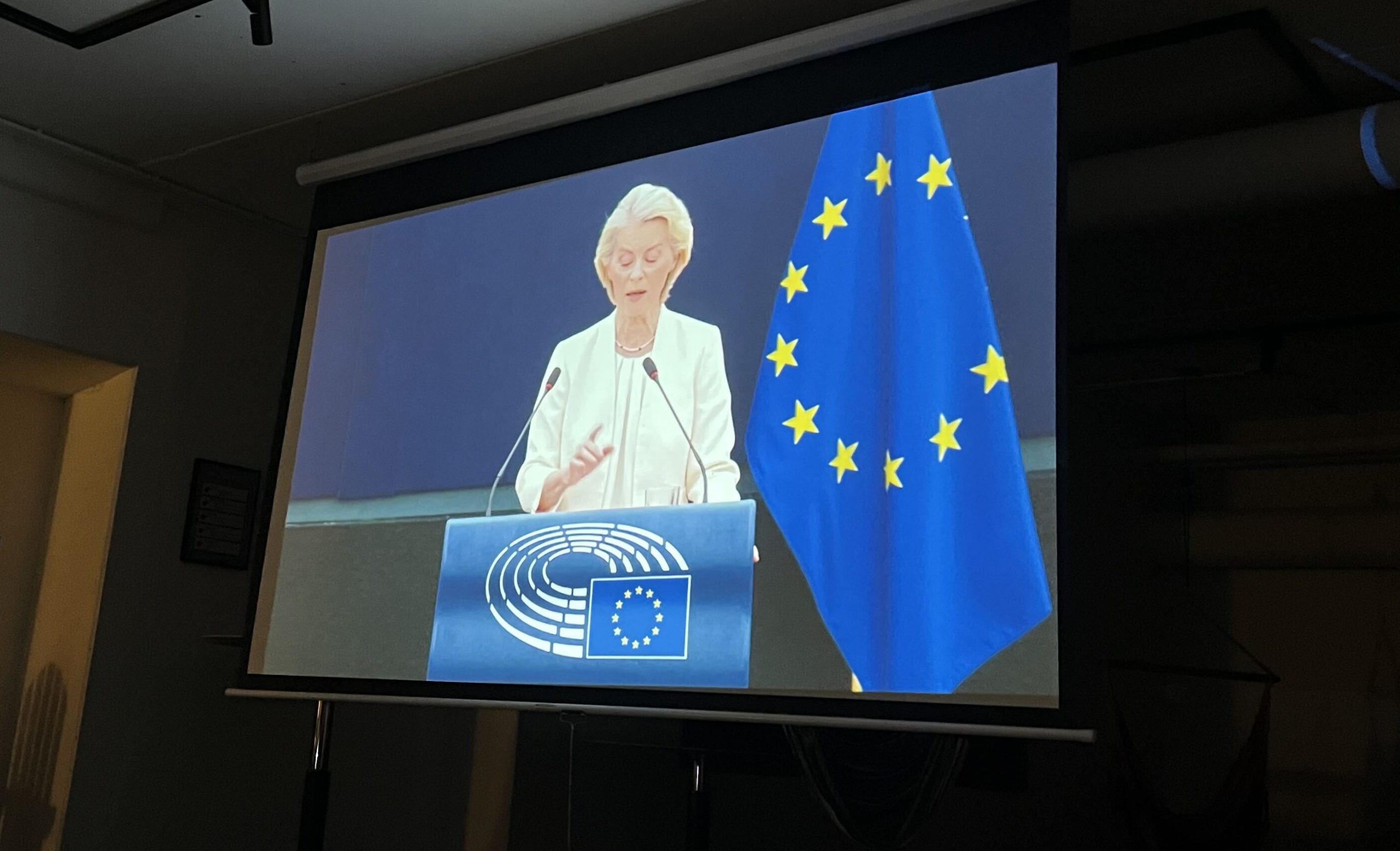
President von der Leyen’s State of the Union (SOTEU) address placed security, Ukraine, competitiveness, climate change and Europe’s strategic independence at the centre of the EU agenda. It also introduced an important new focus on protecting children online through the proposed EU Kids Act. But where were the children facing the greatest barriers to exercising their rights?
For Eurochild, children’s rights must remain visible across Europe’s wider agenda - from online safety, tackling child poverty and implementing the European Child Guarantee to education, mental health, housing, care and the next EU budget. These issues are deeply interconnected.
The coming year will be decisive. The negotiations on the 2028–2034 Multiannual Financial Framework (MFF) will shape how the EU invests in children, families and communities for the next seven years. Alongside the implementation of existing commitments, including the European Child Guarantee and the European Pillar of Social Rights, the next EU budget must ensure that resources reach the children and families facing the greatest barriers to their rights and opportunities.
A welcome shift on online safety
Eurochild welcomes the focus on children’s online safety and the proposed EU Kids Act.
The debate has moved beyond the polarising choice between a “ban” and “no ban”, which obscures the real issue: whether we accept a digital environment designed around profit and attention capture, or insist that platforms are accountable, transparent and safe by design for children.
We look forward to analysing the proposal, consulting our members and engaging constructively to ensure that it fully protects and promotes children’s rights. This must include children’s rights to protection, participation, privacy, freedom of expression and access to information. While we welcome the reference to the prohibition of AI-generated child sexual abuse material, introduced last year, greater attention is needed to prevent and address child sexual abuse and exploitation, including through the swift adoption of a permanent and effective EU Regulation to prevent and combat child sexual abuse. We also look forward to contributing to the Digital Fairness Act and the revision of the Audiovisual Media Services Directive.
However, children do not experience the digital world separately from their material circumstances, family situation or place of residence. Meaningful access to the digital world depends on suitable devices, reliable connectivity, digital skills and trusted adults, as well as services designed to respect children’s rights and keep them safe. Protecting children online therefore also requires investment in children, families and communities offline.
Tackling poverty, housing challenge and regional inequalities
We welcome the recognition that care, housing, and staying in the region are rights, not privileges. For children, access to adequate housing, care, education, healthcare and other essential services can shape the course of an entire lifetime.
Families continue to face high food, housing and energy costs, economic insecurity and increasing pressure on public services. Regional inequalities also persist. Poverty rates are highest in cities and other urban areas, meaning a larger proportion of children may live in households experiencing poverty there. On the other hand, rural and remote areas are losing populations and essential services, leaving some children without access to the professionals and support they need.
The announced European Care Deal, investment in regions and renewed commitment to the European Pillar of Social Rights must focus on children, particularly those experiencing poverty, children with disabilities, children with a migrant or ethnic minority background, children in alternative care, children in single-parent or large families, and those living in disadvantaged areas. We welcome the Climate Insurance Alliance, the European Heatwave Plan and the commitment to identify the 100 territories most at risk from climate change. This agenda must explicitly include children and recognise that vulnerability is often cumulative: poverty, inadequate housing, exclusion, environmental risks and limited access to services can reinforce one another.
Defending rights and democracy
We welcome the strong defence of fundamental rights and the recognition of threats to democracy. Civil society organisations, including Eurochild’s members, are indispensable to this work. They reach children and families whom public systems may not reach, provide trusted support, identify emerging needs and bring children’s experiences into policymaking. Yet many face insufficient and increasingly uncertain funding.
Protecting democracy also means protecting the principles through which children’s rights are understood. Children must always be recognised as rights-holders, not only as vulnerable individuals or future workers and citizens, in all contexts, including when they are in contact with the law.
The future cannot be genuinely equal while women continue to carry a disproportionate share of unpaid care responsibilities. Affordable, accessible and high-quality care is essential to women’s rights, participation and access to employment, and to children’s wellbeing.
Children on the move
The Commission announced an EU Emergency Response Framework for large-scale migration situations, including temporary flexibility in existing procedures, which could risk reducing the rights of children on the move.
For Eurochild, children’s rights must remain explicit and non-negotiable in all migration and asylum responses. This includes protecting family unity, unaccompanied children, reception conditions, access to education and healthcare, child protection and safeguarding.
This is particularly important when increased returns are presented as a measure of success. Migration policies must be assessed not only by how efficiently returns are carried out, but by whether children’s rights, safety and wellbeing are fully protected throughout the process.
Children affected by war
Eurochild welcomes the continued support for a resilient Ukraine and the recognition of Ukrainian children and young people not only as victims, but also for their strength, resilience and contribution.
We also welcome the Commission’s recognition that Israeli settlement projects are unacceptable and its commitment to supporting. We regret the omission of any reference to accountability for alleged war crimes committed by Israel and the absence of a discussion of the EU’s decision not to suspend the EU-Israel Association Agreement, despite persistent concerns regarding compliance with international law and the protection of children's rights in the occupied Palestinian territory.
Armed conflict inherently violates children’s rights. Supporting children affected by war must go hand in hand with efforts to achieve peace, uphold international law and ensure accountability.
From commitments to implementation
Any discussion of children’s rights risks becoming empty if it overlooks the children facing the greatest barriers. Disadvantages frequently overlap: poverty, disability, migration status, discrimination, inadequate housing, alternative care and geographic isolation can create multiple and mutually reinforcing inequalities.
Eurochild will monitor how the commitments announced in the SOTEU translate into concrete policies, funding and improvements in children’s lives. In particular, we will advocate for:
- Adequate and traceable investment in children in the 2028-2034 EU budget;
- Strong implementation of the European Child Guarantee, the EU Anti-Poverty Strategy and the European Pillar of Social Rights, supported by effective monitoring through the European Semester;
- An EU Kids Act and wider digital framework, including the Digital Fairness Act, the revision of the AVMSD and permanent strong legislation addressing child sexual abuse;
- Children’s explicit inclusion in EU action on housing, care, climate resilience, migration, enlargement and intergenerational fairness;
- Integrated child protection systems that invest in prevention, family strengthening and accessible services, including mental-health support for every child, including through the Action Plan on children involved in crime.
- Meaningful child participation and sustained support for civil society organisations, ensuring that children’s experiences and expertise inform EU policymaking; and
- A strong defence of children’s rights against discrimination, anti-rights movements and democratic backsliding.
The SOTEU sets a direction for the year ahead. Eurochild’s role is to ensure that all children remain visible within that agenda, not only as a group requiring protection, but as rights-holders whose wellbeing, participation and opportunities must be central to Europe’s future.