Europe cannot afford to leave children behind in its next EU budget
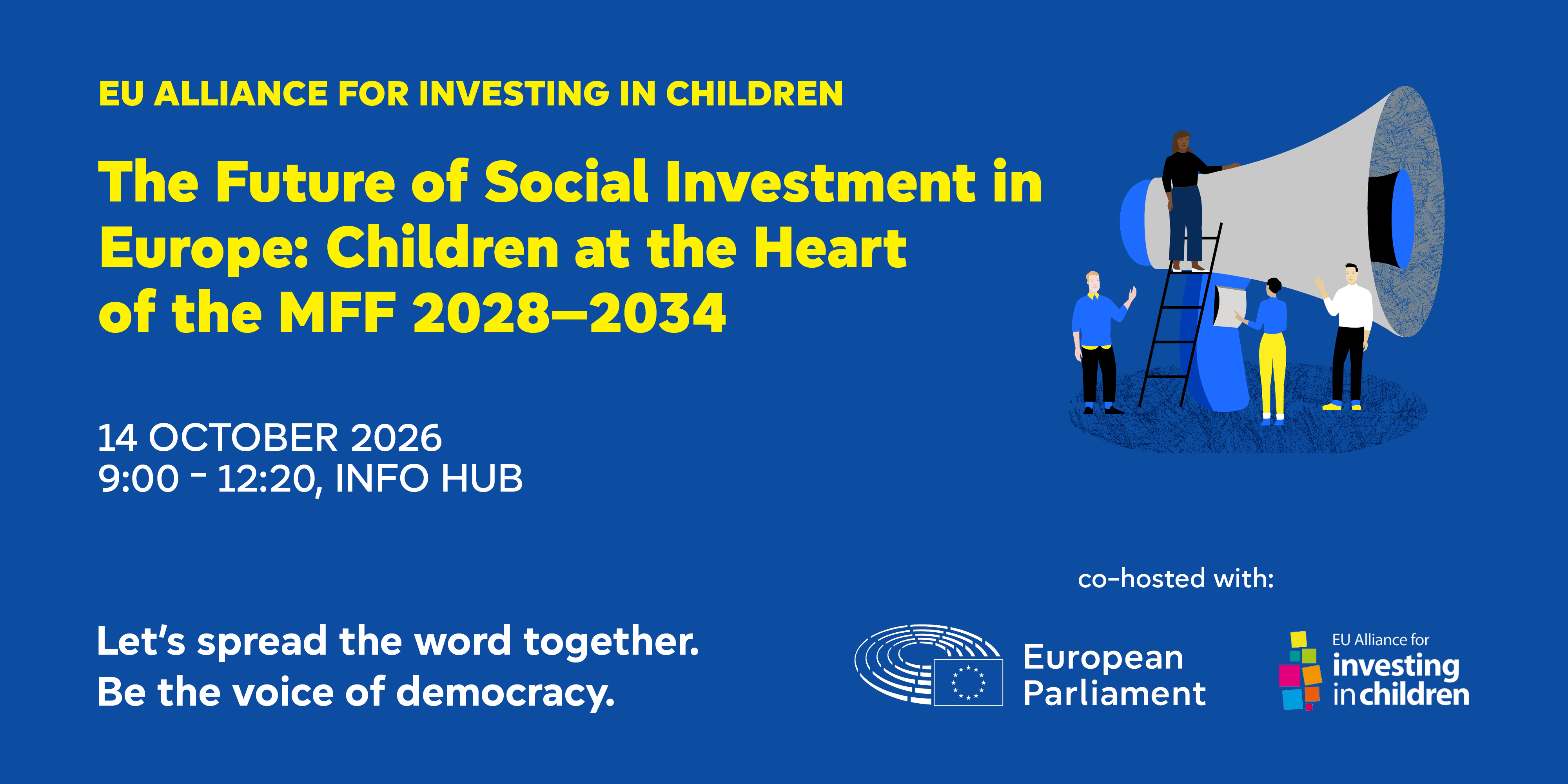
At “The Future of Social Investment in Europe: Children at the Heart of the MFF 2028–2034”, the EU Alliance for Investing in Children’s event on 14 October, speakers set out five priorities for protecting investment in children in the next EU budget.
Nearly one in four* children in the European Union is at risk of poverty or social exclusion. As negotiations on the EU’s next long-term budget for 2028–2034, the Multiannual Financial Framework (MFF), gather pace, Europe faces a political choice: protect and strengthen investment in children, or allow their needs to become less visible among competing priorities.
That choice was the focus of the event, held at the European Parliament InfoHub in Brussels. Co-chaired by Eurochild and Save the Children, the Alliance convened it with support from a Tanya’s Dream Fund project led by Eurochild. It brought together Members of the European Parliament (MEPs), the European Commission, civil society, financial institutions and philanthropy, with around 90 participants in person and almost 50 online to discuss how the next EU budget can deliver meaningful change for children and families.
A child cannot wait for the next budget cycle
“A child born today will be eight years old by the end of the next MFF”, highlighted Dr Ally Dunhill, Director of Policy, Advocacy and Communications at Eurochild, in her opening remarks. Those are formative years in which access to early childhood education and care, healthcare, nutritious meals, safe housing and family support can change the course of a life. Prevention and early intervention are not optional add-ons: they help families stay together, reduce avoidable harm and provide children with opportunities that exclusion would otherwise deny them.
The challenge remains immense. Eurochild highlighted that around 19.2 million children (24.3%) were at risk of poverty or social exclusion in 2025, roughly the same number as the 2019 baseline. The EU’s ambition to lift at least five million children out of poverty by 2030 is not being met at the necessary pace. Participants stressed that the social and economic costs of underinvestment are borne by children now and by society for years to come.
Protect what works and give the European Child Guarantee the resources it needs
The European Child Guarantee has already established a common framework for delivering essential services to children in need. As Eurochild’s Zuzana Konradova, EU Affairs Coordinator, explained during the first panel, it has also improved national coordination, monitoring and accountability. Concrete examples include the expansion of free school meals in Croatia and stronger access to early childhood education in Lithuania. But policy frameworks alone cannot deliver a structural reduction in child poverty without sustained investment.
A central concern was the proposed move towards National and Regional Partnership Plans (NRPPs). The European Commission underlined that integrated plans could combine infrastructure and services more effectively, and that child poverty would remain a required investment area. Civil society and several MEPs warned, however, that flexibility without protected allocations risks leaving children to compete with more politically visible priorities.
In a video message, MEP Klára Dobrev (S&D) called for a strong European Social Fund and at least €20 billion dedicated to the European Child Guarantee. MEP Estelle Ceulemans (S&D) highlighted the risk of weakening the visibility and predictability of social funding. MEP Hristo Petrov (Renew Europe), who spoke on the second panel, put the issue simply: “Earmarking makes a priority harder to forget.”
Georgi Elenkov, Director of Policies for Children at the National Network for Children in Bulgaria, stressed that dedicated funding must go hand in hand with stronger accountability for the results achieved. Drawing on Bulgaria’s experience, he warned that greater flexibility in the next EU budget must not come at the expense of protected investment in children.
Social investment is Europe’s future investment
In the second panel, speakers from the European Investment Bank and the Council of Europe Development Bank illustrated how loans, guarantees, grants and advisory support can complement EU funds and help deliver schools, housing, healthcare and community services. Save the Children Sweden showed why long-term EU support matters even in wealthier welfare states; Tanya’s Dream Fund explained how early support, trusted community relationships and family-centred services can prevent crises before they escalate.
Such partnerships can help scale effective solutions, but they cannot substitute for predictable public financing or clear accountability. As speakers repeatedly stressed, the test of success is not merely whether funds are allocated or projects completed, but whether the most disadvantaged children actually receive support when they need it.
Five priorities for the negotiations identified at the event
- Protect a strong, identifiable European Social Fund Plus (ESF+) and ensure that poverty reduction and children’s rights remain explicit objectives of EU spending.
- Guarantee meaningful minimum allocations: at least 25% for social inclusion; at least 5% for tackling child poverty in every Member State, rising to 10% where child poverty is higher; and at least €20 billion for the European Child Guarantee.
- Fund prevention and accessible, high-quality services together, not just buildings, but qualified staff, outreach, transport, family support and community-based alternatives to institutional care.
- Embed binding child-rights safeguards, including protection against financing segregation and institutionalisation, and strengthen child-sensitive monitoring and the European Semester.
- Give children, families and civil society a real role in shaping and monitoring investment, and measure improvements in their lives rather than spending alone.
As the Parliament and Member States negotiate the next MFF, Eurochild and its partners in the EU Alliance for Investing in Children call on decision-makers across political groups to turn Europe’s commitments into protected funding and measurable results. Children’s rights should not depend on which competing priority attracts the loudest voice. As Georgi Elenkov argued, social cohesion and equal opportunities are fundamental to Europe’s long-term security and should not be set against defence spending. Investing in children is an investment in social cohesion, security, resilience and Europe’s long-term prosperity.
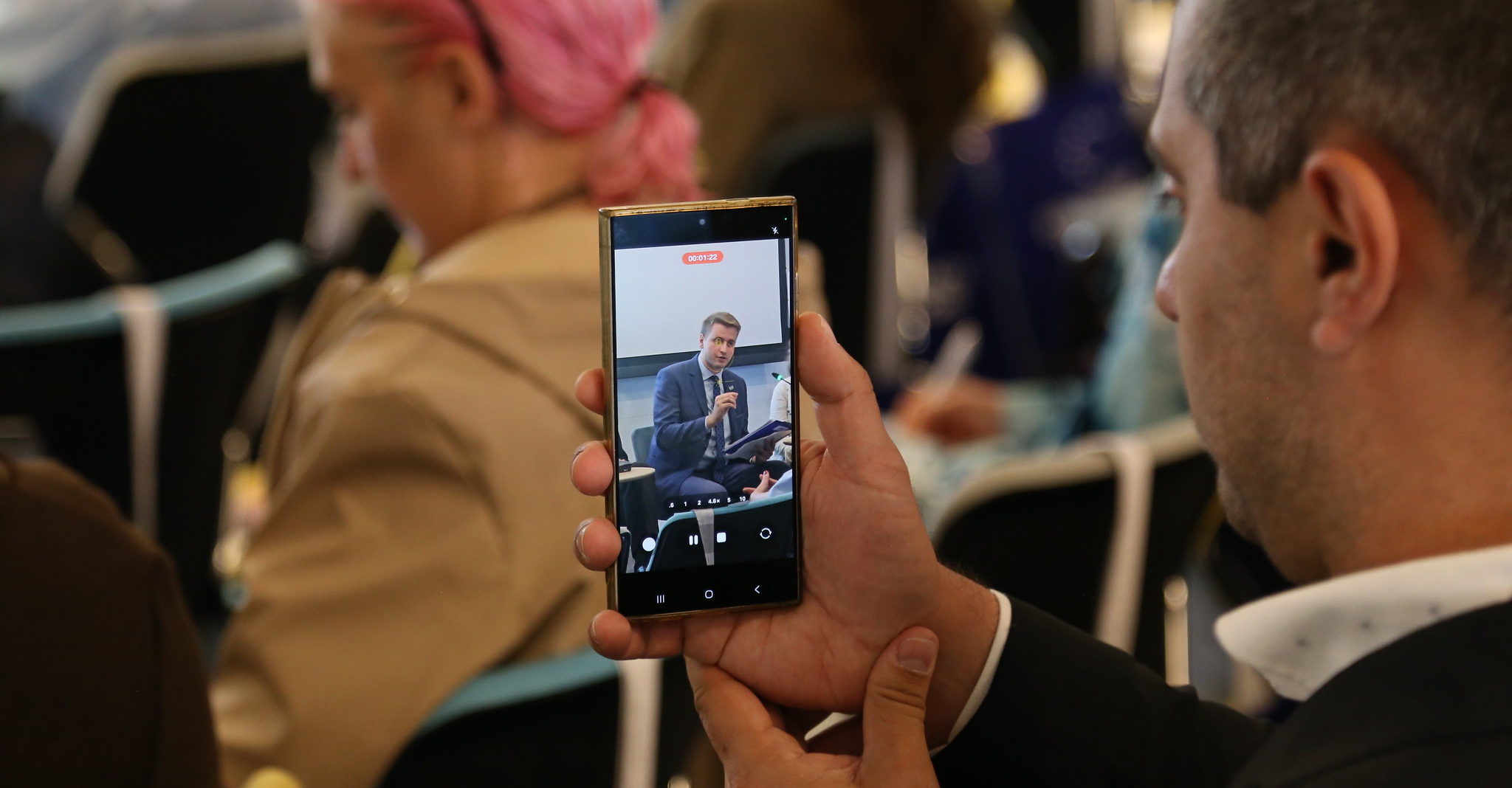
Look at the photos from the event
*Note: 2026 AROPE statistics