Bucharest EU Children’s Declaration on Child Participation in Decision-Making
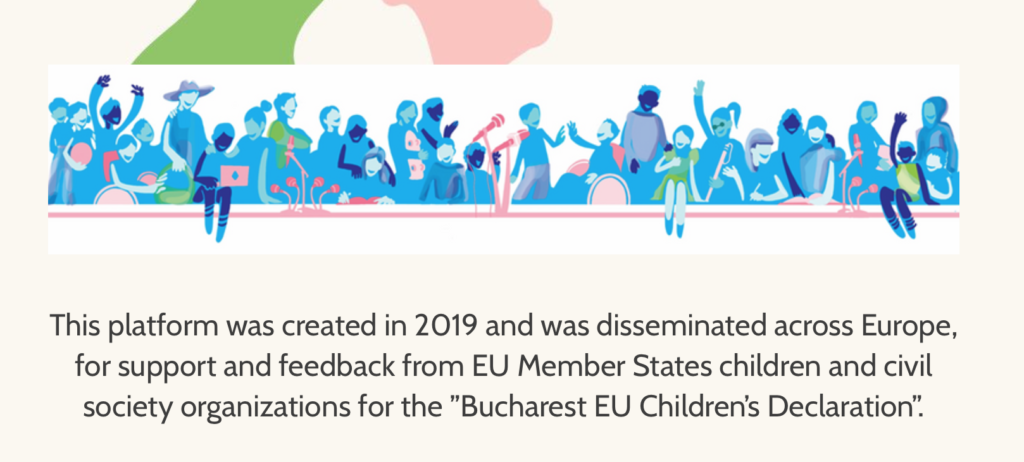
Children from all over the EU will gather in Bucharest to present their commitment and to call on the leaders of EU Member States to make child participation a priority and a reality.
The Romanian government, holding the Presidency of the EU the first half of 2019, has made the promotion of children’s rights and in particular the right to participate as its key priority. During the Romanian Presidency a “Bucharest Children’s Declaration” will be developed and agreed to at a Children’s Summit on 6-7 May in Bucharest. Eurochild will be participating at the Summit with several delegations of children and adults.
A first draft of the Bucharest Children’s Declaration has been developed by a group of 25 Romanian children, the so-called Romanian Children’s Board, in consultations with other children in Romania. The draft Declaration is now open for feedback from both children and organisations working with and for children. Consultations can be organized with children on the Declaration and its results can be included in the feedback form.