Child Participation - Eurochild’s achievements in 2025
Annual Report 2025.
In 2025, Eurochild further embedded child participation within its own governance and programmes. Children were involved not only in consultations and advocacy activities, but also in decision-making structures.
A major step forward was the establishment of a Child Participation Subcommittee within the Management Board, with representation from the Eurochild Children’s Council (ECC). This helped ensure that safeguarding and child rights considerations systematically informed governance decisions. The ECC also contributed to Eurochild’s new Strategic Framework, presented its annual report at the General Assembly, and interviewed Management Board candidates ahead of their election.
In addition, a dedicated group of eight children aged 12 to 17 joined Eurochild’s new NOVA Council, which aims to bring children’s perspectives directly into law- and policy-making processes on child safety online. Their work includes making recommendations to policymakers, participating in public events, and meeting representatives of EU institutions.
Eurochild also supported children to influence international and European processes. ECC members contributed directly to the UN Special Representative of the Secretary-General on Violence against Children (SRSG-VAC) report on child poverty as a driver of violence and the need for child-centred social protection, which was presented to the UN General Assembly. They also met with the EU Youth Delegate to the UN, who brought their views to the UNGA.
The ECC also developed a child-friendly version of the European Commission’s Guidelines on mental health and wellbeing at school and discussed it with representatives of DG EAC, DG JUST and European Parliament Vice-President Ewa Kopacz. Eurochild coordinated a child-led event on World Children’s Day together with partners from the Child Rights Action Group.
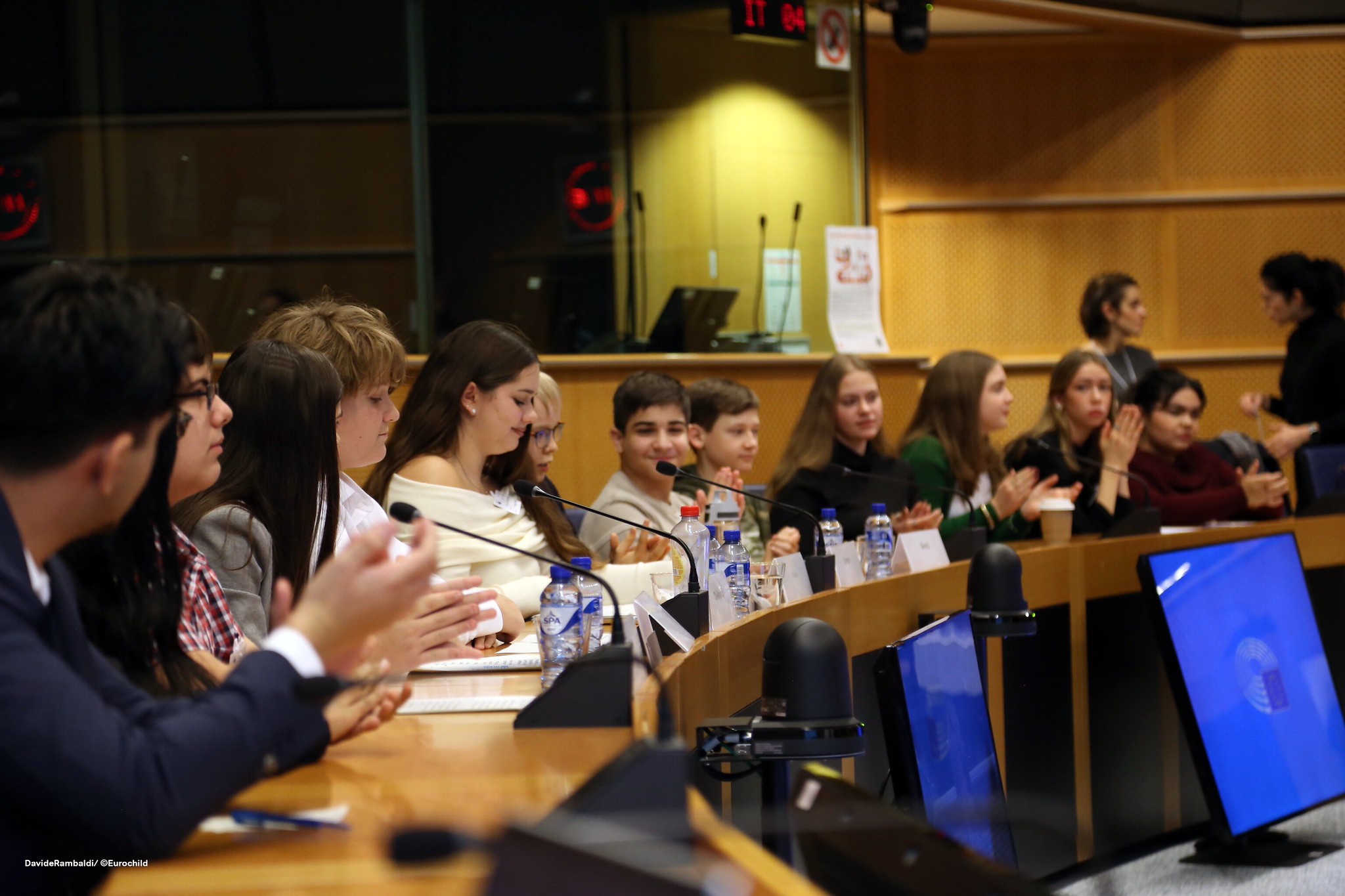
During this event, children met with MEPs and Commission officials, including representatives from DG EMPL, DG JUST and DG CONNECT, and addressed issues such as the inclusion of children with special needs and disabilities and the need to tackle bullying and cyberbullying. These mechanisms strengthened the legitimacy, relevance and accountability of Eurochild’s positions, while also demonstrating practical models of participatory governance that members can replicate nationally.
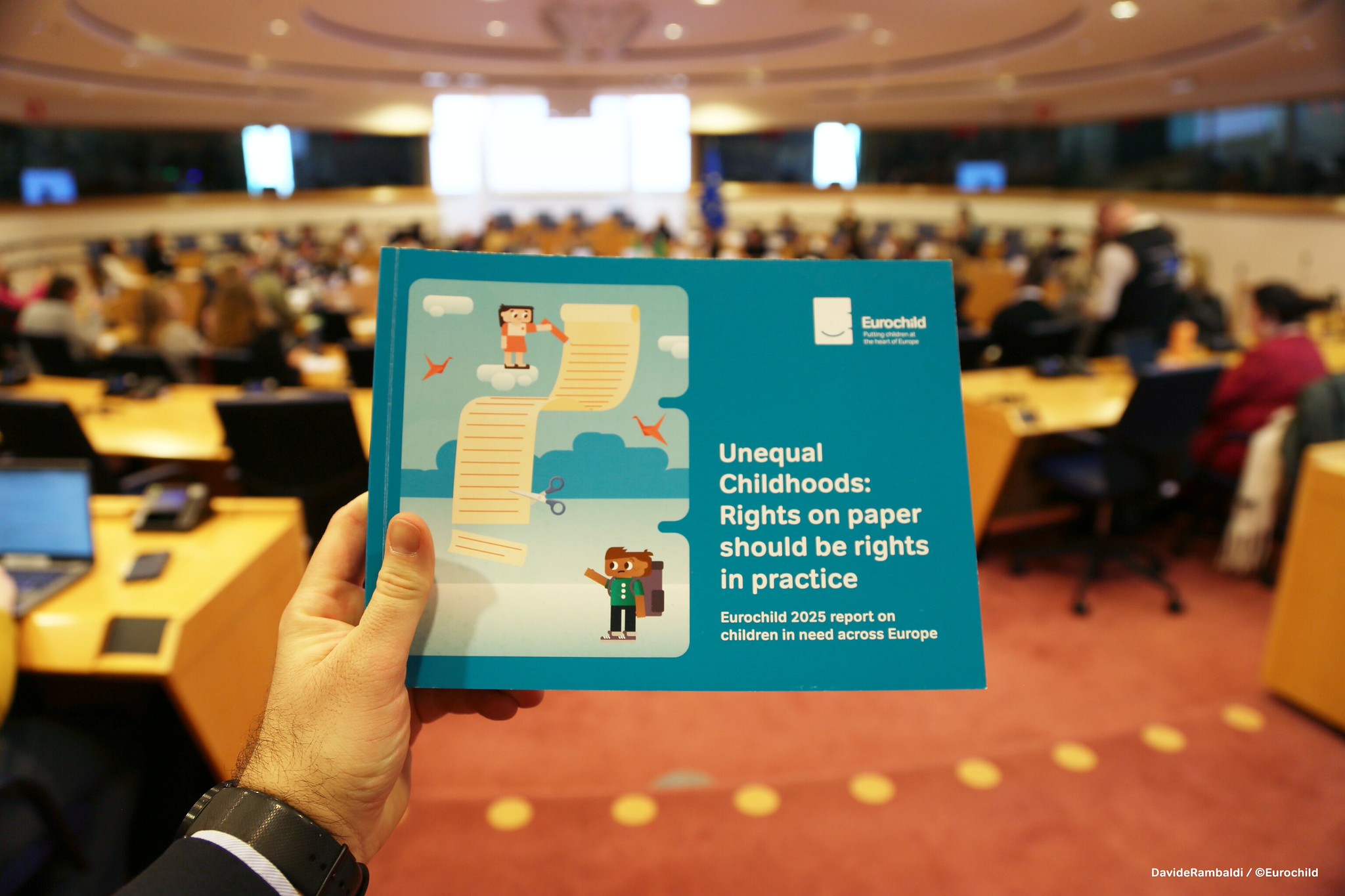
ECC members were also active in communicating their work through podcasts, webinars on meaningful child participation and mental health and wellbeing at school, as well as videos on online safety and the International Day of Play. Eurochild also developed a dedicated sub-report on child participation, monitoring policies and practices across countries.
A report analysing consultations with children on mental health with the National Eurochild Forums was published.