Citizens' assemblies: A space for children and young people
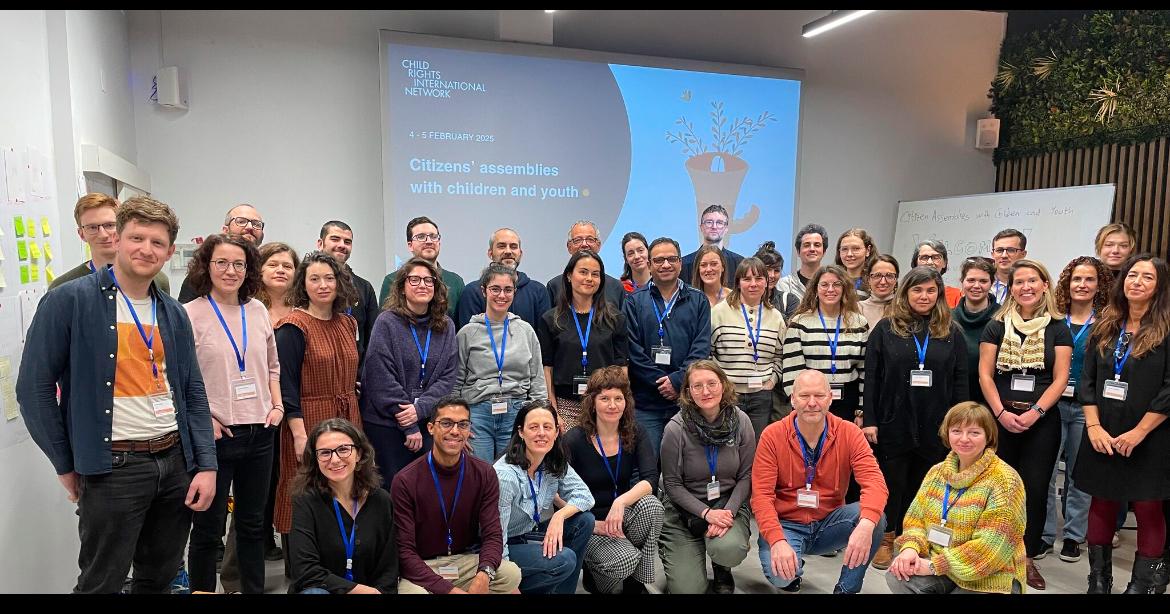
A blog by Carine Le Borgne, Eurochild Child Participation Coordinator, about her experience joining a training workshop titled "Citizens' Assemblies with Children and Young People", organised by Coglobal which gathered 40 participants from 15 different countries across Europe and was led by the Child Rights International Network (CRIN).
Citizens' assemblies are increasingly being used as an approach to public engagement. Typically, participants are randomly selected to learn about, deliberate on, and offer recommendations for addressing key issues. When involving children and young people, assemblies can be organised in different ways from more separated processes to a fully intergenerational assembly. For me, incorporating children into citizens' assemblies is essential.
We need to encourage intergenerational dialogue because it helps bridge the gap between age differences and addresses the unequal power relations between children, young people, and adults. It also provides an opportunity for adults to listen to and reflect on the experiences of children and young people, engaging with them in creating common actions that can transform their communities. Additionally, it encourages active citizenship by involving children as participants in shaping their own lives and contributing to their communities. Ultimately, this approach leads to more inclusive and thoughtful decision-making.
This event was also an opportunity to share Eurochild’s experiences and insights on meaningful child participation, with a special focus on the Eurochild Children’s Council. From my experience working with children, we still face several obstacles:
- While adults are willing to listen to children, they are often not ready to work collaboratively with them or view them as partners in the process;
- Adults tend to underestimate children’s abilities and fail to fully value their perspectives;
- Children often don’t receive feedback on how their input is considered or how it influences the decisions made by adults;
- Professionals, politicians, and EU representatives lack sufficient training in child participation and safeguarding;
- Children’s participation is still primarily a binary relationship between children and adults, rather than a more inclusive, triangular relationship involving children, facilitators, and decision-makers.
This event also marked the launch of our sub-report on 'Child Participation in Europe', part of Eurochild's 2024 flagship report, 'Children's Realities in Europe: Progress & Gaps'. The report highlights how children’s voices are included in national initiatives, the barriers to meaningful participation—particularly for marginalized children—and how child participation is funded across Europe. After gathering insights from members across Europe, Eurochild has provided actionable recommendations for European governments and institutions to better protect and promote children’s rights to participate.