Daphne-CHILD: Building Capacity for Meaningful Child Participation Across Europe
Blog by Carine le Borgne, Eurochild Child Participation Coordinator, explaining how the Daphne-CHILD project webinar brought together over 60 professionals and grantee partners to reflect on challenges, share learning, and strengthen meaningful, safe, and inclusive child participation across Europe.
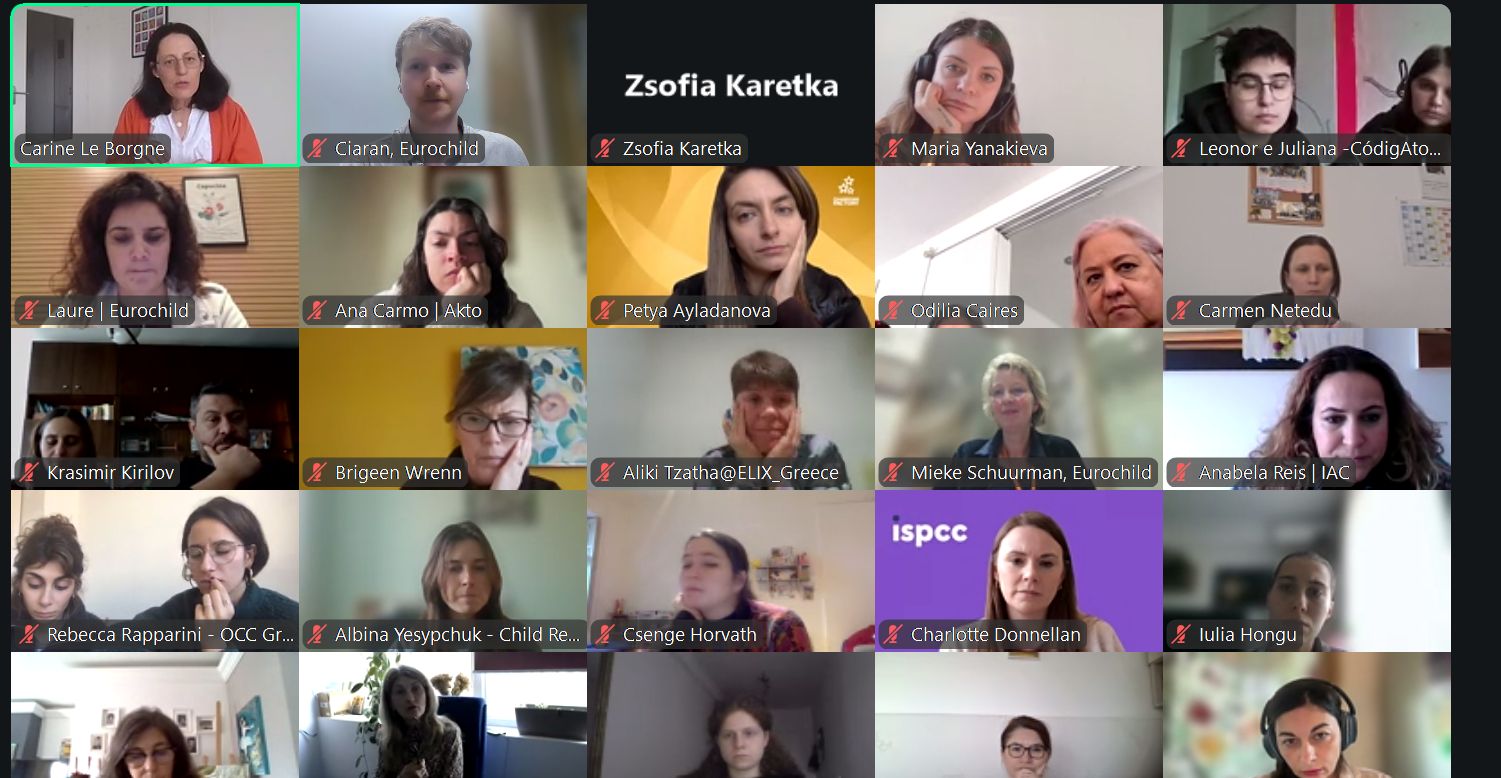
As part of the Daphne-CHILD programme capacity building activities, Eurochild recently convened a dedicated session with more than 60 professionals from civil society organisations to come together with our grantee partners and reflect collectively on our practices working meaningfully with children.
Together, we wanted to ensure that our 48 grantees from 9 European countries had time to share their challenges, their difficulties, and, importantly, their learning. We aimed to enable participants to see that they are not alone facing these challenges and that there are solutions to implement meaningful child participation.
We opened the session by sharing by introducing the Nine Principles for Meaningful, Safe, and Inclusive Child Participation, outlined by the Committee on the Rights of the Child in General Comment No.12, The Right of the Child to be Heard (CRC/C/GC/12, July 2009, para. 3). These 9 principles provide the foundation for Eurochild work on child participation, and were used to help participants self-reflect on their practices. They are:
- Transparent and Informative – Children should receive clear, understandable information about the purpose of an activity and their role in it.
- Voluntary – Participation is optional, and children choose to be involved.
- Respectful – Children’s views must be taken seriously and valued, even if not all suggestions can be acted upon.
- Relevant – Topics addressed should connect to children’s lives and experiences.
- Child-Friendly – Participation should be accessible and engaging, using child-friendly methods and environments.
- Inclusive – All children, regardless of background or ability, can participate.
- Supported by Training – Adults facilitating participation need proper training and guidance to help children express themselves effectively.
- Safe & Sensitive – Measures must be in place to protect children’s privacy and ensure they feel secure in sharing their opinions.
- Accountable – Children should receive feedback on how their contributions were considered and the impact they had.
Carine shared insights from how Eurochild, for over 20 years, has navigated important considerations for meaningful and safe child participation, including:
- Conducting risk assessments before activities to identify and mitigate potential risks to children.
- Training professionals, politicians, and EU representatives on child participation and safeguarding, so they understand both the protections required, and the benefits for involving children in decision-making.
- Recognising that children are experts in their own lives, and their insights can provide practical solutions to complex challenges.
- Providing clear feedback to children on how their views are considered and the impact they have.
- Communicating with children through child-friendly documents and materials.
- Adults as barriers: many adults are willing to listen but are not always ready to collaborate with children as equal partners. Adults often underestimate children’s capacities and may lack training in meaningful child participation.
- Meaningful engagement requires sufficient staff capacity and time to plan and implement participation activities effectively.
At Eurochild, we see child participation as a continual learning exercise. Every challenge is an opportunity to improve, to better ensure that children’s voices are not only heard but respected, acted upon, and valued. Child participation works best as a triangular relationship (child, facilitator, and decision-maker) rather than a simple child-decision-maker dynamic. This model promotes dialogue and collaboration, ensuring children’s perspectives are genuinely integrated into decision-making processes.
Little Voices, Big Ideas - Seeing the world through children’s eyes
Next up was Charlotte, one of our Daphne-CHILD grantee partners from ISPCC in Ireland. Charlotte shared their project Little Voices, Big Ideas: A Conversation with Children about Peer-to-Peer Violence. This initiative co-created an educational module with 8-12 year-old children to raise awareness of bullying and cyberbullying. The project addresses the urgent need for child-centred approaches to combat peer-to-peer violence, based on children’ lived experience in the region.
What shone from Charlotte’s presentation, who leads the Little Voices project, was that:
- Play and creative methods are powerful tools to help children feel safe, comfortable, and emotionally regulated during participation activities. Through games, art, storytelling, and other creative approaches, children can share perspectives that might not emerge in traditional discussions. Play can reduce power imbalances between adults and children and fosters deeper understanding and more meaningful engagement.
- Children’s voices should never be underestimated - they bring insight, creativity, and nuance that adults alone could not imagine. Using flexible, child-centred methods and allowing sufficient time for engagement ensures meaningful participation. Group size, relationships, safety, and inclusion are all critical conditions that shape authentic dialogue.
- Children’s perspectives are like hot air balloons: they add colour, movement, and new angles to the issues that matter. When children feel respected and safe, they share ideas more freely, helping adults see the world through their eyes and uncover solutions that might otherwise remain hidden.
Moving from one national example to many more – the reflections jumped into breakout sessions. Participants had a chance to listen to 4 other grantee partners sharing their challenges and learning with child participation, and opening the floor for everyone to share. This was led by Leonor Oliveira from CodigAtomiko – Portugal; Maria Yanakieva from Concordia – Bulgaria; Ljiljana Vasic from Pomoc Deci – Serbia; and Liubov Kolomiets joining from Feminist Network – Ukraine.
When we returned together, Eurochild’s long-term member and ally in the field of child participation, Professor Cath Larkins, facilitated a reflection session together to harvest our collective learning. Some key messages that emerged from across the room:
- Adults tend to think in abstract terms, while children think through action.
- Participation can be limited at school by teachers, but in some cases, teachers can also act as facilitators who enable participation. School is a great place to reach children, with fewer obstacles to participation (for example, no need for parental support).
- Feedback and accountability are essential to encourage children’s participation; children need to understand how their voice and opinions are used.
- It is important to remind children that participation is their right, as they often hear from adults that their voice does not matter.
- The necessity of flexibility in programme design (puzzle/constructor approach).
- Recognising that every group is different and has distinct needs.
- The importance of adapting to reality.
- A trauma-informed approach is essential - including attention to details such as wording (e.g., in a country where many children have lost their parents, you don’t say “your parents”; you say “the adults you live with”).
- Care: Showing that you genuinely care is crucial that you are truly interested in the young people you work with, beyond just fulfilling your job responsibilities.
- Connection: Building trust is essential. This includes giving feedback, creating genuine spaces for listening and inclusion, and taking an adaptive and flexible approach that demonstrates we listen, share, and CARE alongside children.
- Time: Child participation takes time. We won’t always get it right immediately, but the journey is deeply worthwhile.
As convenors, found this session so inspiring – as did our participants, who collectively reported a growth in confidence to implement child participation in their organisations.
Given the breadth of expertise across the 48 grantee partners in the Daphne-CHILD programme, we plan to publish a collection of how each funded project is working meaningfully with children. Stay tuned!
To learn more about the grantee partners, visit the Daphne-CHILD website.