From commitment to change: How Bulgaria showed Europe a new path for child protection
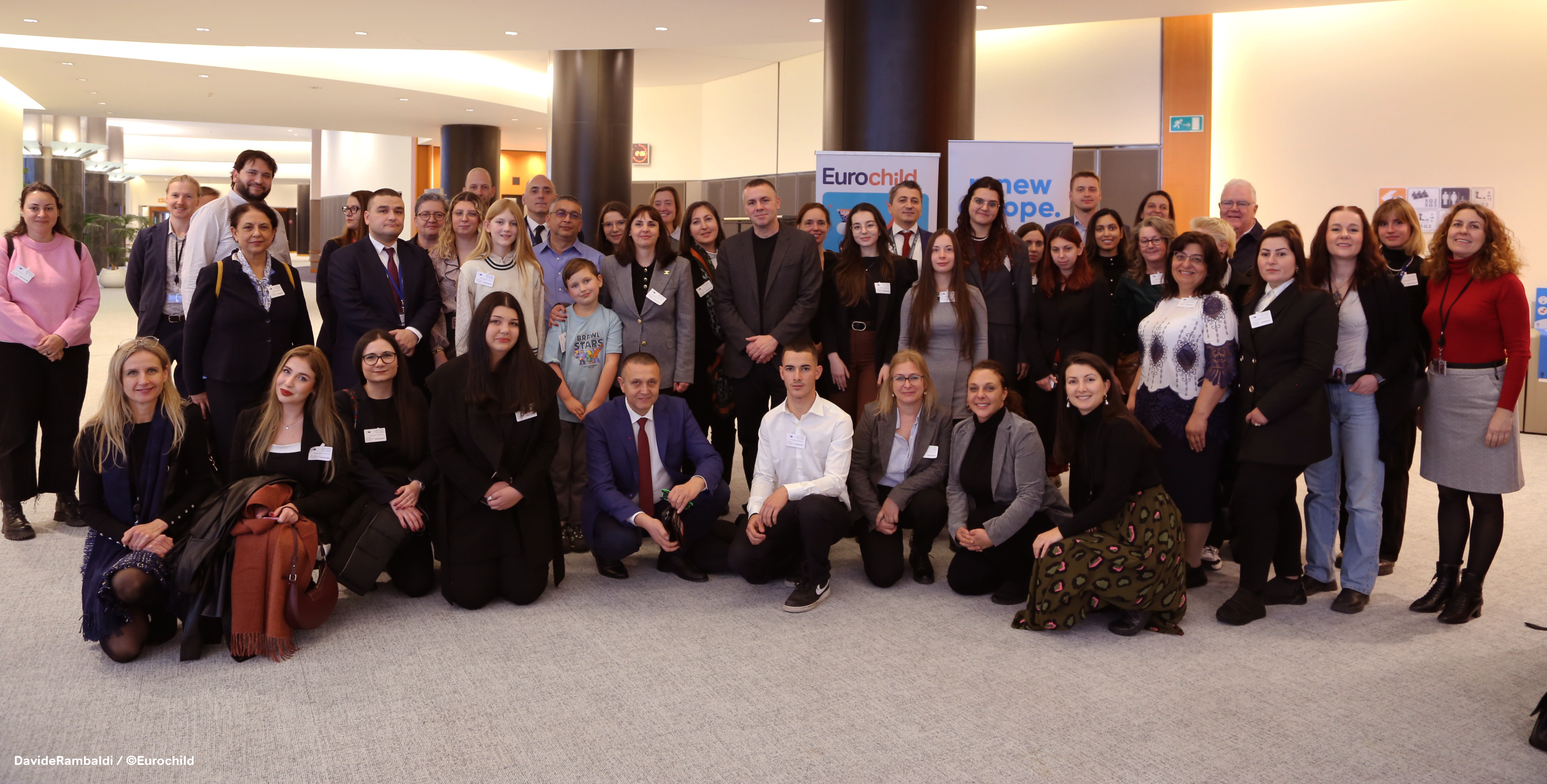
On 2 December 2025, together with MEP Hristo Petrov, Eurochild hosted a landmark event in the European Parliament to mark the conclusion of a three-year transformation effort in Bulgaria.
Supported by Tanya’s Dream Fund, the initiative had worked to strengthen families, prevent child–family separation, and move decisively from institutional to family- and community-based care in Bulgaria. As the country is positioning itself to become the first EU member state without child institutions, the event served as a timely moment to reflect on progress, elevate lived experience, and shape future EU action.
The morning opened with the hosts and key allies setting the tone. MEP Hristo Petrov, Chair of the Parliament’s Working Group on the Child Guarantee, called for renewed political commitment to sustaining reforms. He was joined by Charlotte Smilde, an ESF+ advisor from MEP Marit Maij team, Robbie Stakelum from Eurofound, and Ally Dunhill, Eurochild’s Director of Policy, Advocacy and Communication. Together, they underlined how the European Child Guarantee (ECG) had provided the tools and momentum needed to tackle poverty, improve access to essential services, and put children’s rights at the centre of policymaking.
The first panel highlighted Bulgaria’s progress, challenges and the lessons learned from its implementation of the ECG. Moderator George Bogdanov, Executive Director of Eurochild member National Network for Children, guided an exchange that brought together government, EU institutions, and civil society. Nataliya Efremova, Deputy Minister and European Child Guarantee Coordinator, explained how Bulgaria had coordinated European funding and national reforms to create more coherent, prevention-oriented support systems. Kaloyan Kolev, Team at the Directorate-General for Employment, Social Affairs and Inclusion of the European Commission, described how ESF+ programmes had been aligned with Semester priorities to sustain long-term change. Meanwhile, Iskra Stoykova, Program Manager for Eurochild member Trust for Social Achievement, emphasised the critical role of localised, community-based solutions, in addressing gaps such as access to health care, civil registration, and early childhood services in marginalised communities. Their collective insights showed the importance of a system shifting from reactive responses to early prevention and family-strengthening approaches.
The second panel brought the human dimension to the forefront. Moderated by Social Entrepreneur Dr. Ilina Moutafchieva, the discussion featured lived experts whose personal journeys illustrated why system reform mattered. Maria Atanasova and Julia spoke about The Social Teahouse in Varna and its role in empowering young people leaving care by building community, structure, and emotional resilience. Julia shared personal testimony of what happens when children’s needs remain invisible to the system. From Operation Teddy Bear, Gergana Yordanova and 17-year-old Lyubov reflected on the organisation’s success with its “Hidden Talents of Bulgaria” programme, which had supported more than 80 young people in pursuing education and professional development, but also beyond that – when an organisation and a service provides to their basic human needs for connection and care. Their stories showed that when a system invests in potential instead of managing crises, outcomes change profoundly.
The morning concluded with closing reflections from Dr. Dunhill, MEP Petrov, researcher from Know-How Center for Alternative Care for Children Evgeniya Toneva, and Trinity College Dublin’s Professor of Social Work and Social Policy Robbie Gilligan. Both MEP Petrov and Evgeniya Toneva emphasised the need for evidence based policy making, including involving people with lived experience in shaping the very questions that become a basis for research. Prof. Robbie Giligan emphasised on the importance of creating an ecosystem of actors, including all stakeholders that then can support families and children. All emphasised that the next EU budget cycle must secure long-term funding to embed prevention-focused, community-based models and to continue learning from Bulgaria’s progress.
After a morning of discussion, participants reconvened for a collaborative two-hour debrief session: a space designed not for speeches but for co-creation. Using World Café and Pro Action Café methodologies, they rotated across small tables to identify next steps at local, national, and EU levels; examine structural barriers and enablers; and explore how successful models could be scaled. The final part of the afternoon invited participants to pitch and refine emerging initiatives, with up to five ideas taken forward. Proposed actions included innovations such as establishing a Roma Consultative Body to guide the implementation of the European Child Guarantee in Bulgaria.
By the end of the day, one conclusion emerged clearly: Bulgaria’s experience had shown that when political will, EU funding, civil society innovation, and lived experience aligned, meaningful and lasting change becomes possible.