Introducing the EU Guidance on Independent Living: Stakeholders’ Reactions
Eurochild, together with EASPD, the European Disability Forum, COFACE, and Inclusion Europe, hosted a panel on the Guidance on Independent Living, contributing to the discussion with a focus on the children’s rights perspective.
The European Commission recently launched the Guidance on Independent Living and Inclusion in the Community, a significant milestone in advancing the rights of persons with disabilities. As highlighted in this Eurochild’s reaction, the guidance offers an opportunity to support the transition from institutional to family- and community-based care for people with disabilities.
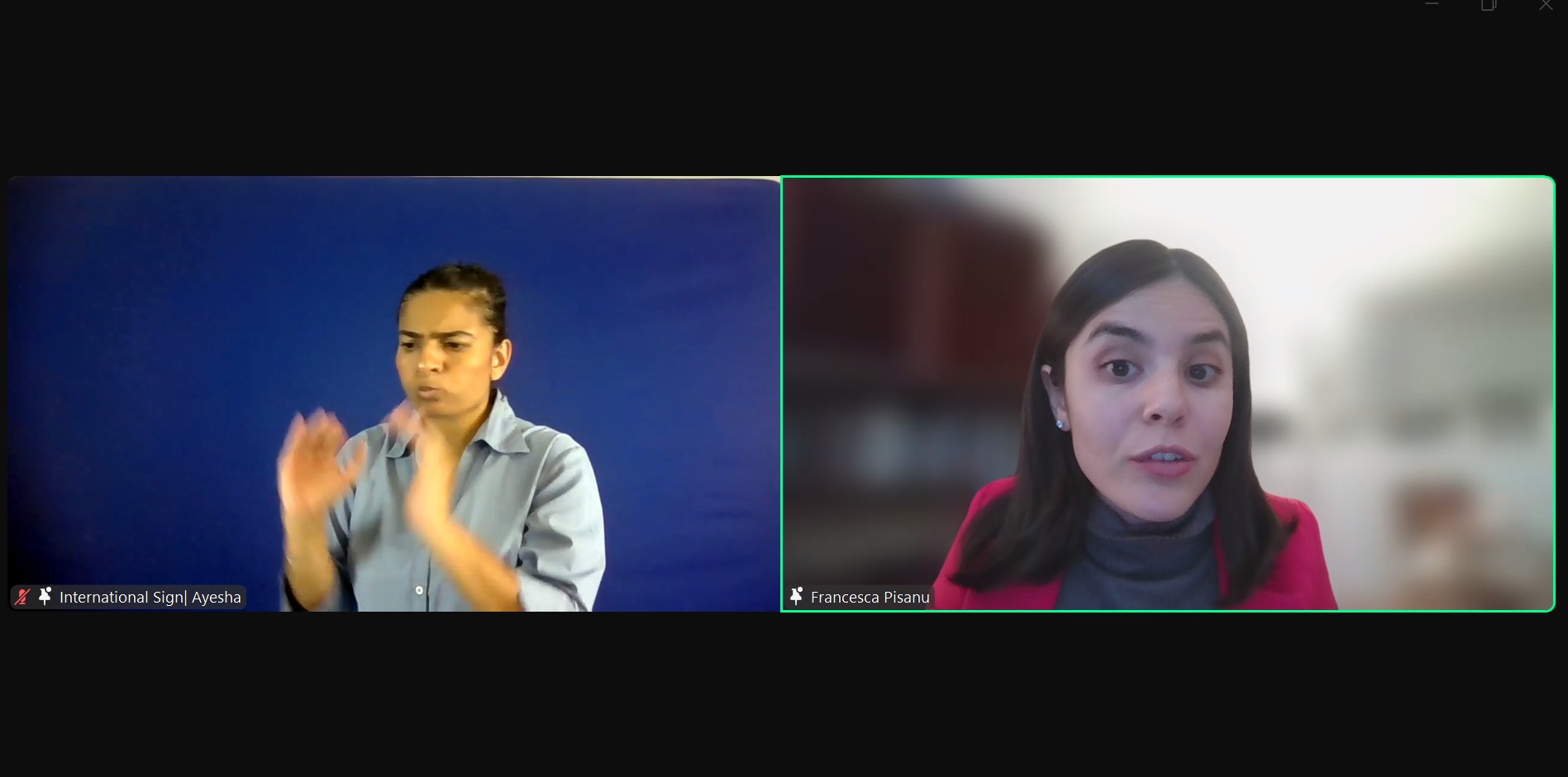
Eurochild’s contribution
Francesca Pisanu, Eurochild EU Advocacy Officer, highlighted that, despite the EU’s commitment to supporting the transition to family- and community-based care through its key policies and legislation, and despite growing awareness of the harm caused by institutionalisation, some member states are witnessing an increasing number of children being separated and institutionalised.
Stakeholders’ reactions
Olga Martínez de Briones from DG Employment, Social Affairs & Inclusion at the European Commission provided an overview of the guidelines, followed by reactions from various stakeholders.
Nadia Hadad from the European Disability Forum praised the guidance’s clarity and practical steps for fund allocation. However, she raised concerns about ensuring compliance by EU authorities and Member States, urging a paradigm shift supported by a comprehensive strategic plan.
Milan Šveřepa of Inclusion Europe highlighted the persistence of institutionalisation, particularly for individuals with intellectual disabilities. He emphasised the need for sustained support during transitions and called for clarity on the Commission’s next steps to maintain momentum.
Ines Bulic from the EU Network on Independent Living welcomed the guidance, and highlighted the need for independent monitoring and the direct involvement of persons with disabilities in evaluation processes. She also urged the EU and member states to improve data collection to track fund allocation and project impact.
Antonia Torrens from COFACE Family Europe acknowledged the emphasis on the family’s role in deinstitutionalisation and advocated for strengthening families to enable them to better support their member with disability.
Lilith Alink and Thomas Bignal from EASPD applauded the guidance for providing a holistic approach to EU funding, offering clarity for service providers. They also stressed the importance of widespread advocacy and local-level implementation of the guidance.