Will the next EU budget strengthen or weaken the EU’s commitment to tackling child poverty?
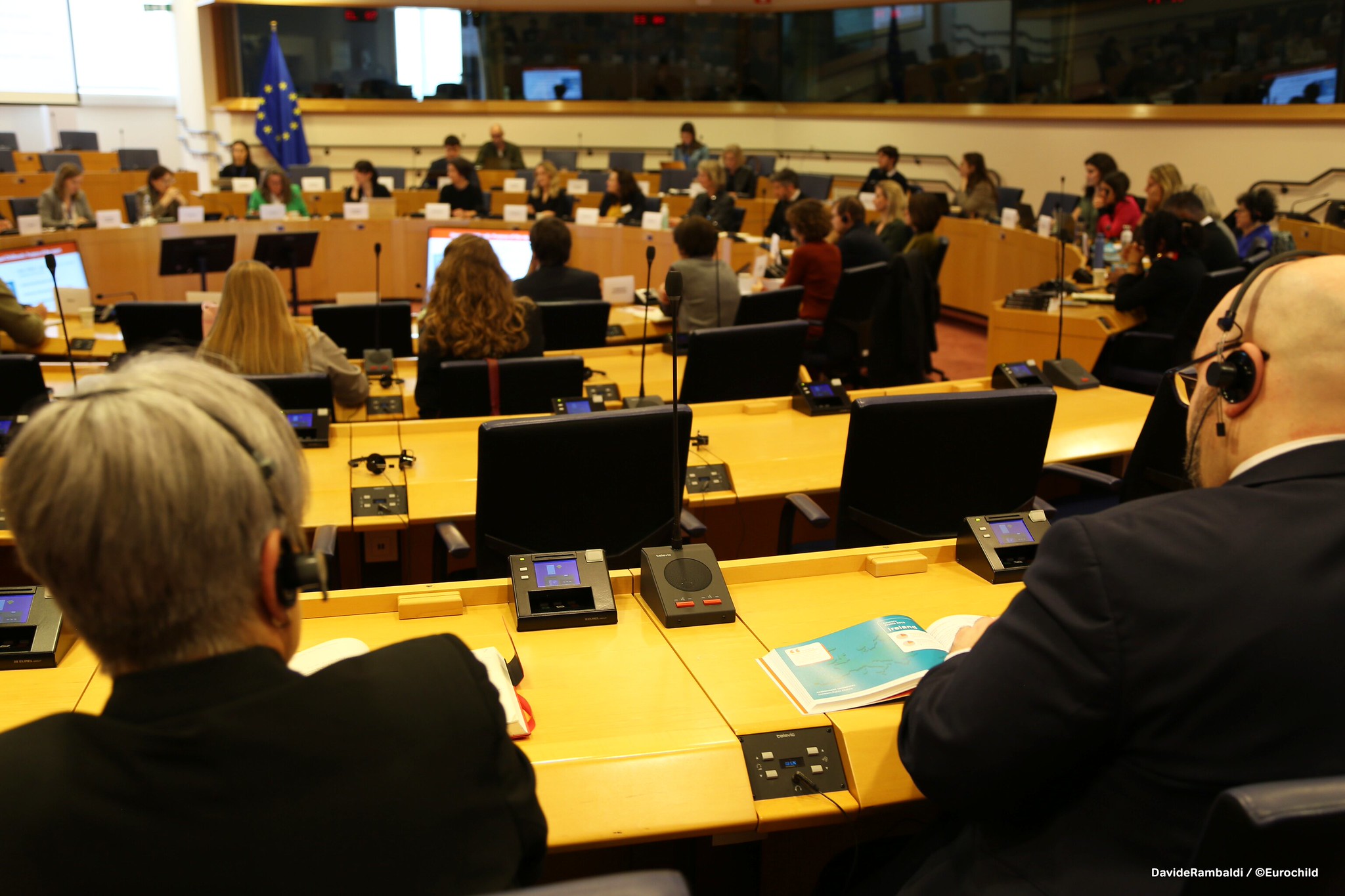
On 5 March 2026, MEP Marit Maij and MEP David Casa led a debate at the European Parliament on the future of the European Social Fund and its role in tackling poverty and social exclusion, as negotiations intensify on the EU’s next long-term budget, the post-2027 Multiannual Financial Framework, and possible changes to EU funding instruments.
- From Expenditure to Investment in Children
A key shift needed in EU policymaking is to move the narrative from expenditure to investment in children. Evidence increasingly shows that investing in children generates strong economic and social returns. The 2024 Employment and Social Developments in Europe (ESDE) Report estimates that an additional €11 billion per year is needed to meet the EU’s early childhood education and care (ECEC) targets. At the same time, the EU School Meals Report highlights that such investments can generate economic returns of up to €34 for every €1 invested. Conversely, the cost of inaction is significant. Child poverty and social exclusion are estimated to cost Europe around 3.4% of GDP each year, demonstrating that preventing poverty is not only a social imperative but also a sound economic strategy.
- The European Child Guarantee and the Role of ESF+
The European Child Guarantee (ECG) is one of the EU’s most important policy tools for combating child poverty. Anchored in the 2021–2027 Multiannual Financial Framework, the initiative has benefited from strong financial backing through the European Social Fund Plus (ESF+), which provides more than €8.9 billion for its implementation. Unlike many EU initiatives that struggle due to limited financial resources, the ESF+ has provided crucial support for the Child Guarantee, allowing Member States to implement targeted measures and services for children in vulnerable situations. However, the future of this support is now uncertain.
- Concerns About the New EU Budget Architecture
The European Commission’s July 2025 proposal for the next EU budget introduces a major structural change: the standalone ESF+ would be replaced by a broader framework of National and Regional Partnership Plans (NRPPs), where social funding is integrated with other instruments. While integration can bring policy coherence, it also raises concerns. Without clear references to children’s rights and dedicated investment in children, funding for measures combating child poverty could be reduced or deprioritised. In this context, the European Parliament’s strong position in support of the ESF and social investment is particularly welcome.
- Policy Coherence Through Enabling Conditions and the European Semester
One way to safeguard social priorities is through thematic enabling conditions aligned with the European Pillar of Social Rights. In particular, the enabling condition requiring a strategic framework for social inclusion and poverty reduction could help ensure that EU-funded reforms align with national and regional policies. This will be especially relevant once the upcoming EU Anti-Poverty Strategy is adopted, particularly if it includes national strategies focused specifically on children.
Another key priority is the mainstreaming of children’s rights within the European Semester, the EU’s annual cycle of economic and social policy coordination. Child poverty, social exclusion, and related issues such as children’s health and mental health should be systematically addressed in Country-Specific Recommendations (CSRs).
- Making the Partnership Principle Meaningful
The partnership principle, which requires Member States to involve civil society in the design and implementation of EU funds must be applied meaningfully rather than as a formality. Evidence from Eurochild shows that civil society participation remains limited. For example, across ESF+ monitoring committees in all Member States, there is currently only one representative from a child-focused organisation, in Croatia. This situation highlights the need for stronger and more systematic engagement. At EU level, civil society organisations should also be represented in the ESF Committee.
- A Clear Political Message from the European Parliament
The European Parliament recently sent a strong signal in its report on the EU Anti-Poverty Strategy, calling for a dedicated budget of at least €20 billion for the European Child Guarantee. The report also recommends that Member States allocate at least 5% of ESF+ funding to combating child poverty, rising to 10% for countries with above-average levels of child poverty and social exclusion.
If the EU is serious about eradicating child poverty, future reforms must shift priorities from crisis response towards prevention, supported by sustainable funding and a comprehensive, holistic approach that tackles the structural drivers of poverty.