Paving the way to realise children’s rights online in Europe
Sub-report on children's rights online based on assessments provided by 32 Eurochild members in 22 countries.
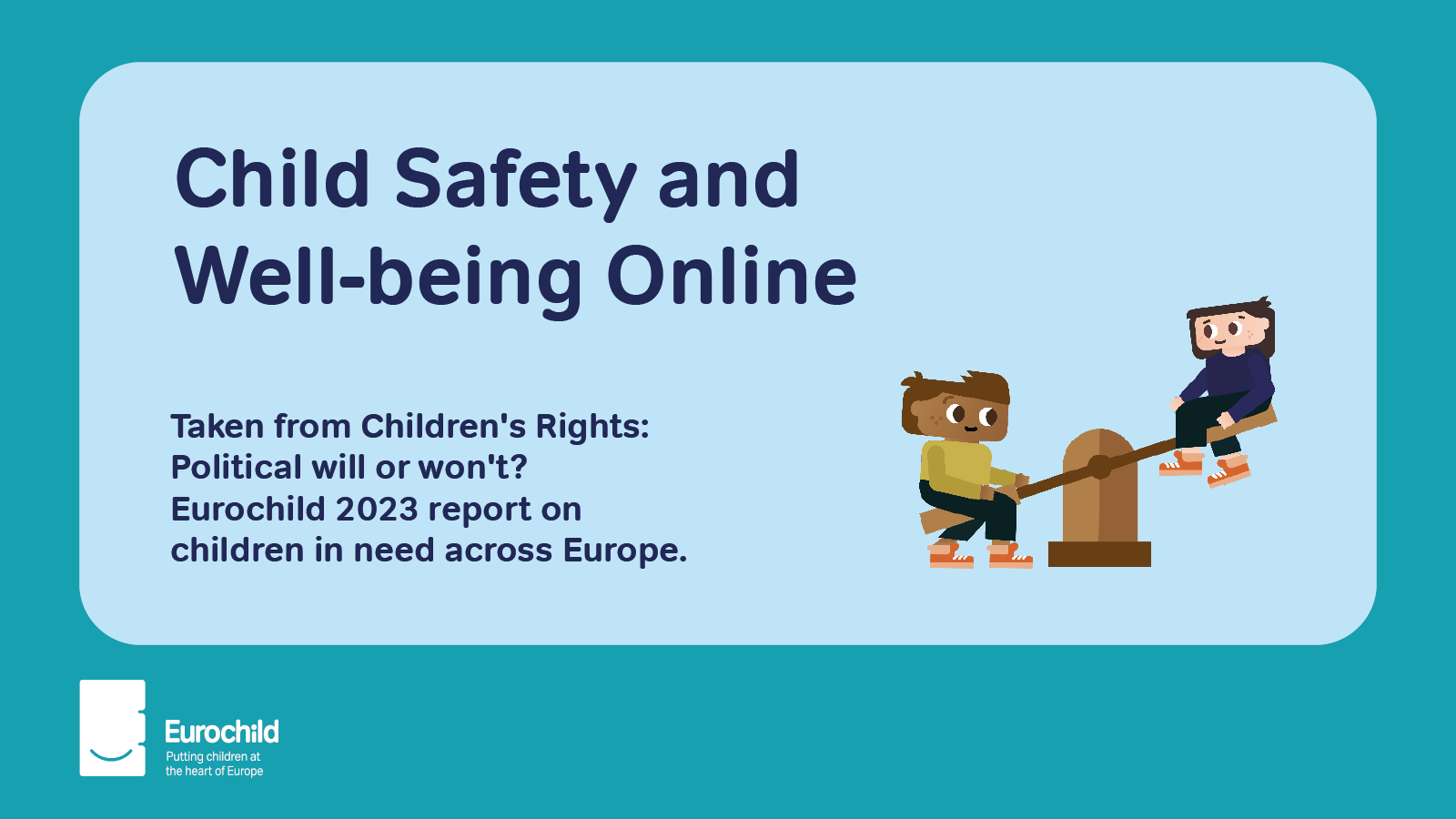
This report compiles information on children’s rights in the digital environment extracted from Eurochild’s 2023 report on children in need across Europe, Children’s Rights: Political will or won’t?.
As children across Europe live in an increasingly digitalised world, society adapts to respond to emerging challenges. While online environments bring many benefits for children in terms of development, socialisation, and educational opportunities, they also create a new set of challenges to be tackled. Eurochild members report that children are increasingly at risk online, with disastrous repercussions on their mental health and general well-being.
This section will outline existing good practices in different participating countries and analyse the main risks highlighted by Eurochild members in terms of online child safety, and their repercussions on children across Europe.
Policy Recommendations n policy-makers at EU and national level:
- To keep the political momentum to mainstream a child-rights based approach into digital legislation and policy at EU and national level;
- To ensure additional robust legislation that holds platforms accountable for protecting children from online harm, especially cyberbullying and child sexual abuse, and paying special attention to avoiding hubs of impunity for perpetrators in neighbouring countries;
- To work on the implementation and enforcement of already existing policies, in particular the Digital Services Act at EU level, the LOPIVI in Spain and the Online
- Safety Bill in the UK at national levels;
- To increase investment in digital literacy and skills programmes, while ensuring a multi-stakeholder approach to digital literacy and skills that empower children to exercise their rights online, going beyond online safety and the remit of education;
- To ensure national policies and provision of services supporting children’s wellbeing are well equipped to address online harm and support the effects of digital technologies on the mental health of children; working in close collaboration with civil society organisations, reinforcing the protection services provided by them at national level;