All Children, All Rights? When children’s rights become conditional
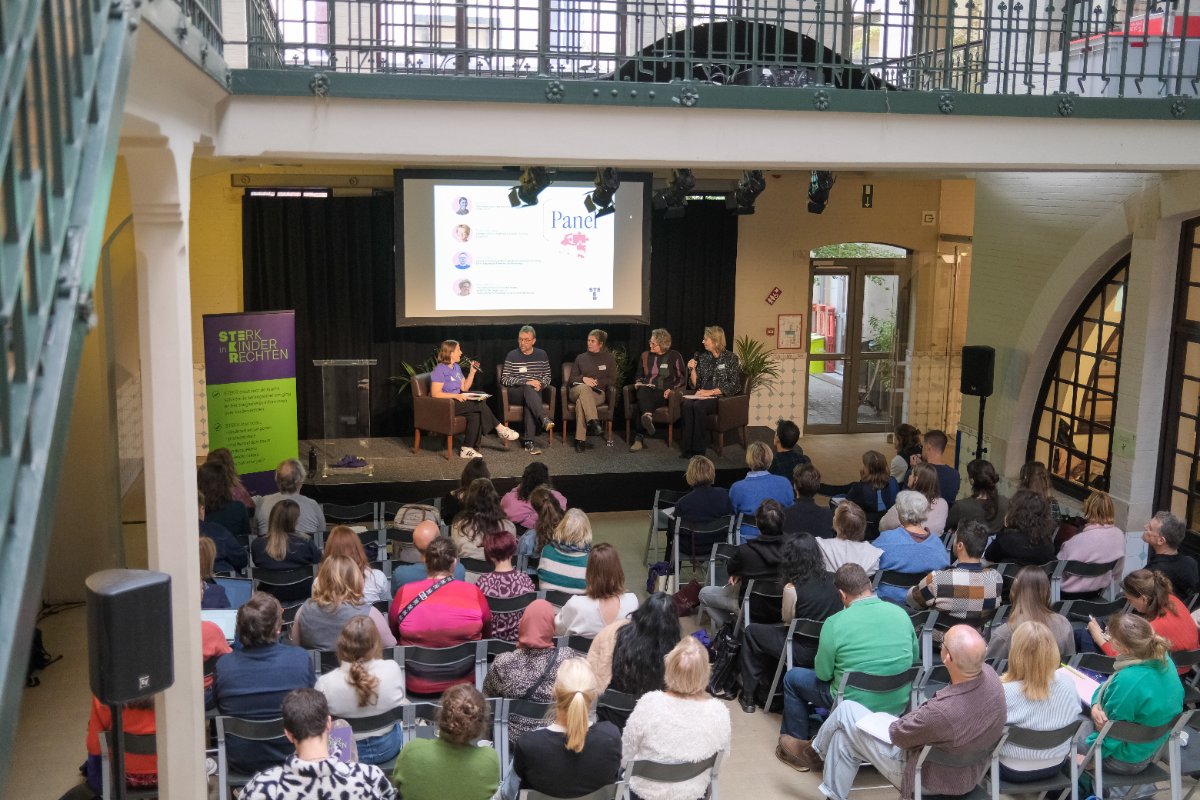
Eurochild Belgian member STEKR, brought together researchers, practitioners, civil society organisations and public authorities in Brussels on 22 October for its first knowledge event 'All Children, All Rights?'. The event explored why universal children's rights remain difficult to access in practice and what needs to change to ensure that every child can enjoy their rights without discrimination.
The starting point was a seemingly simple question: what happens when children increasingly have to meet certain conditions before they can fully exercise their rights? Sometimes those conditions are explicit. Support may require an official diagnosis, financial assistance may depend on administrative procedures, and access to services may be linked to particular criteria. At other times, barriers are less visible: families need time, knowledge or confidence to navigate complex systems, or services simply have no place available when support is needed. Together, these examples raise an important question: who is most likely to lose out when accessing a right becomes difficult?
Rights and responsibility
The UN Convention on the Rights of the Child recognises children as rights-holders. Their rights do not depend on merit, behaviour or family circumstances. Public policy inevitably involves rules, eligibility criteria and limited resources. The challenge is to examine what these conditions mean in practice. Do they help support reach children who need it, or create additional barriers? Participants reflected on a wider shift towards individual responsibility, activation, monitoring and sanctions. Such approaches may pursue legitimate policy objectives, but can obscure the structural circumstances shaping children's lives. A child does not experience poverty, education, housing, care and leisure as separate policy domains. They come together in one life.
Looking at the issue from three angles
Three thematic sessions explored these tensions across different areas of children's lives. The first focused on social rights, examining how conditional access to housing, income, care and social support affects children, even when policies formally target adults. The second explored the changing image of children and young people in public debate, particularly narratives around responsibility, nuisance, boundaries and control, and what these mean for their position as rights-holders. The third focused on educational inequality. While education may be universally available, children do not enter the system with equal resources or opportunities. Participants discussed the difference between offering everyone the same thing and creating the conditions for every child to participate and develop. Across all three discussions, the same question returned: when circumstances are unequal, what does equality of rights require from institutions and society?
Four workshops, four ways of moving forward
The afternoon shifted from identifying problems to exploring possible responses. One workshop examined how scientific, professional and experiential knowledge can be brought together to better understand complex social issues. Another explored how organisations can navigate increasingly polarised public debate, where defending children's rights often means making room for complexity. A coalition lab invited participants to consider how organisations with different backgrounds and priorities can build collective action around shared concerns and goals. Finally, participants reflected on the Childcare Case, a Belgian civil society campaign combining public mobilisation and legal action around access to childcare. It offered concrete lessons on turning a rights concern into a broader strategy for change.
What happens between the sessions matters too
Knowledge events are partly about what happens on stage, but much of their value lies in conversations, unexpected connections and recognising shared challenges from different professional perspectives. One participant captured an important lesson: a child does not live in separate policy domains. Education, poverty, housing, care and leisure intersect in a single life. This is why children's rights work requires different forms of expertise and why no organisation can address these questions alone.
From conversation to collective action
The event did not end when participants left the room. One conversation is already developing further within the Flemish Child Rights Network, where members are working on an open letter about growing pressure on the universal character of children's rights. It is one example of what a knowledge event can achieve: not simply sharing what we already know, but creating the conditions for a next step. All Children, All Rights? therefore ended with an open question rather than a conclusion.
If a right belongs to every child, what must we change to ensure that every child can actually exercise it?
Picture taken from STEKR’s website.