When we reduce children's voices to their age
As the Eurochild Children's Council (ECC) concludes its mandate at the Eurochild Conference in Cyprus, Juliette Hudson, Child Participation and Events Intern, reflects in this blog on why children's voices are too often dismissed. Age may be a legal threshold for rights like voting or drinking, but it is a poor measure of whether someone's voice deserves to be heard.
The 2026 Conference on Child Protection Systems was a great success, and much of the positive feedback pointed to the ECC and to child participation more broadly, as a huge part of what made it so meaningful. The ECC ran a workshop and moderated the opening session and closing panels of the conference, and their interactive sessions pulled many attendees out of their usual conference routines, opening up new conversations and a sharing of perspectives. The event also marked the end of their mandate.
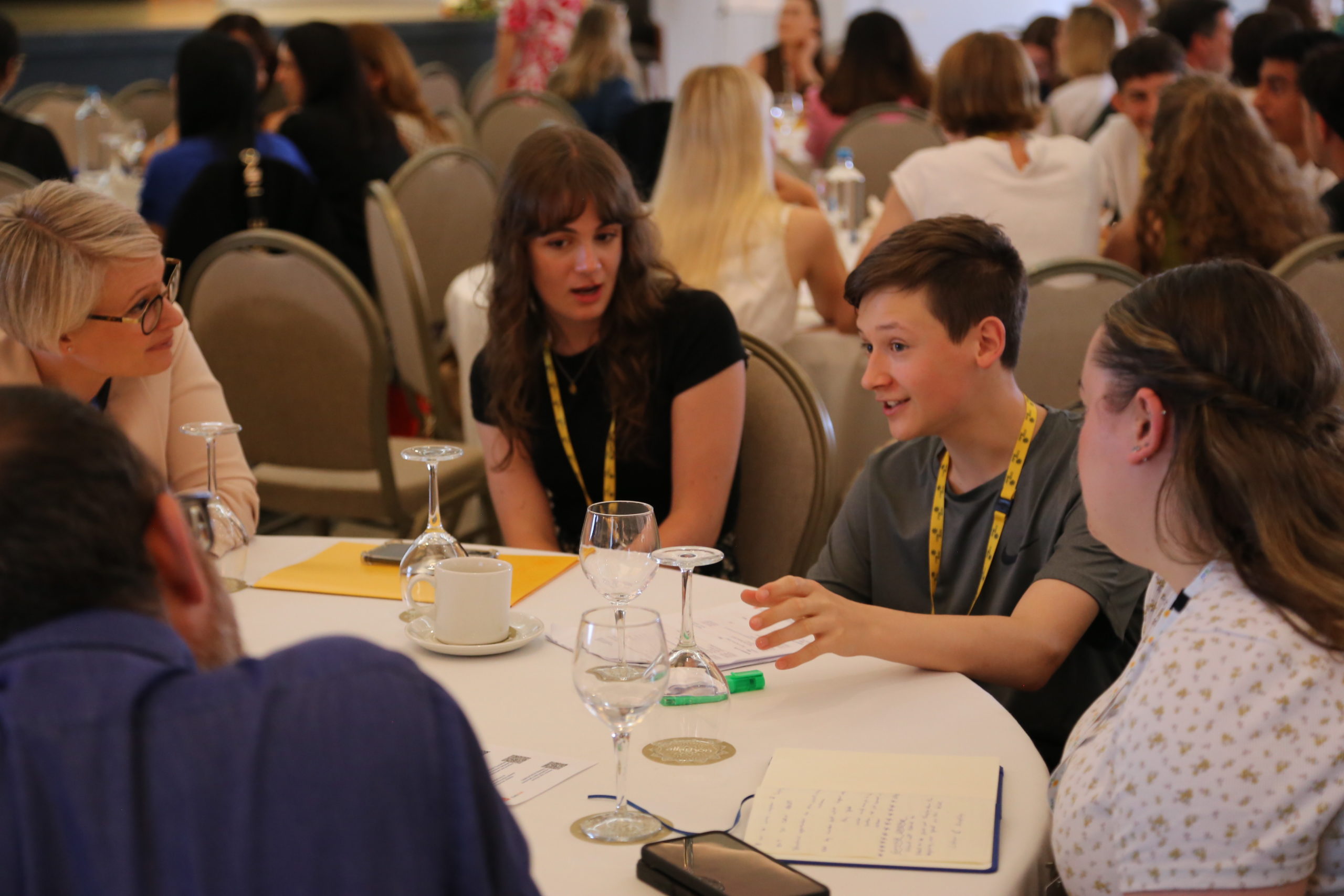
The conference was particularly meaningful not only due to its child-led agenda, but more importantly because children sat at the same tables as adults. In workshops and networking sessions alike, we all sat around the same tables and exchanged ideas on level ground. For some adults, this was in some ways destabilising, to discuss such pressing issues on an equal footing with the children affected by them. The children at the conference were opinionated, fired up, passionate, ready to exchange.
Notably, many conversations kept circling back to age as the limiting, dividing factor. Discussions ranged across topics from social media access to children living in war. Across several different conversations, I noticed adults reaching for comparisons to drinking age or driving age, the idea that if someone isn't old enough to drink, they shouldn't be old enough to vote, use social media, or have a say on certain legislation.
I reflect here on how often these conversations are reduced to age, when age is rarely the issue. After all, readiness to vote responsibly isn't guaranteed by age alone, and plenty of adults are also vulnerable to social media dependency and the risks of the digital world, yet we don't take these rights away from adults on those grounds. When the same facts hold true for children, though, they're dismissed outright because of their age, with little interest in the nuance of individual cases, or in levelling the playing field so these spaces are safe and accessible for children from every background.
This tension sits at the heart of the wider issue of child participation. Children are routinely denied a voice, a seat at the table, simply because they are children, welcomed in only when it suits the adults in the room. At this year's Eurochild conference, we saw the enormous value of inviting children to help build the table, not just sit at it. Children ask us to sit with our discomfort, to question our own norms and practices. They offer perspectives that are essential to how we understand children's rights.
As Eurochild thanks the 2024-2026 ECC: Abigel, Amina, Arthur, Dario, Faidra, Georgios Efrem, Leon, Lucijan, Oleksandr, Rhythm, Tiana, Tuule for their work, their activism, and their endless motivation, we are inspired by their voices, their passion, and their frustration with the systems that do not listen to them. We continue to commit to bringing children into the spaces where they belong, to asking whether spaces that claim to include children are truly listening, and to staying inspired by the children we work with and for.
See here our recent report on Child Participation, based entirely on consultations with children: Our voices matter - Children Define Meaningful Participation: Insights from Five European Countries.